- OrthoThrive
- Posts
- When Christmas Was Illegal:
When Christmas Was Illegal:
The Underground History of Carols, Trees, and That Red Suit (Hint: It Wasn't Coca-Cola), and Why Every Culture Must Fight for Its Traditions

Borris Upton
December 10, 2025
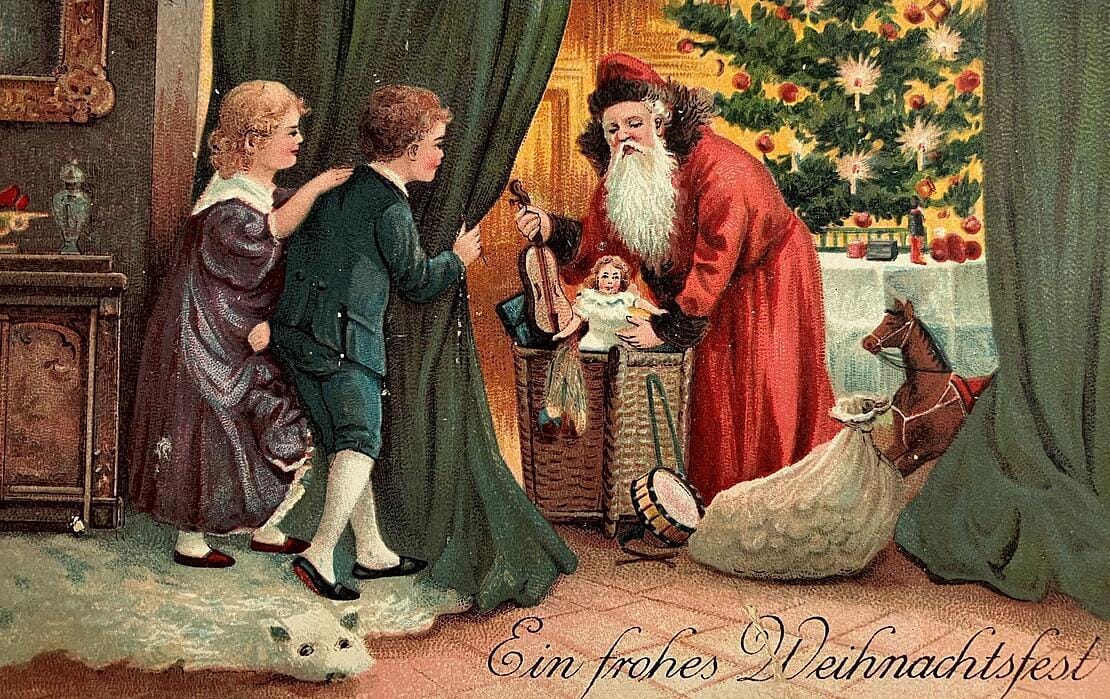
The history of Christmas music surprised me recently.
In 1647, English Puritans outlawed Christmas. Markets shut down, church doors locked, carols silenced. Parliament declared the holiday too rowdy, too Catholic, too pagan for their reformed nation. They abolished not just Christmas but Easter and Whitsun too, suppressing church services and festive customs alike.
The ban lasted officially until the Restoration in 1660, though enforcement varied wildly. Some regions ignored it entirely. Others saw riots break out in Canterbury, Norwich, and London over the right to celebrate. What happened during those years tells us something important about how cultures preserve what matters to them.
Rural villagers kept singing anyway
When 19th-century folklorists went searching for old English carols, they found a surprising source: elderly villagers who still remembered songs their grandparents had taught them. William Sandys and others discovered that rural communities had maintained these traditions through simple stubbornness and family memory.
Not all these preserved songs dated to the Puritan ban. Many were simply old folk songs that had survived through oral tradition for centuries. The folklorists' work revealed something more complex than a simple story of suppression and revival. They found layers of musical tradition, some ancient, some medieval, some more recent, all woven together in rural memory.
This reminds me of the Brothers Grimm in Germany, who collected fairy tales from rural families between 1812-1815. Jacob and Wilhelm Grimm traveled through the German countryside, gathering stories that had been passed down orally for generations. Like the English carol collectors, they discovered that folk memory preserved multiple layers of tradition - some tales dating back to medieval times, others more recent, all transformed through centuries of retelling.
Medieval carols from 1200-1400 CE weren't church hymns at all. The word "carol" originally meant a circle dance with singing. These were songs for village feasts, harvest celebrations, and winter gatherings. They had refrains, dance rhythms, and a festive character completely different from liturgical chant or polyphony. Church authorities had always been suspicious of their popular nature.
Reading Nora Loreto's research revealed specific examples. "Deck the Halls" derives from a 16th-century Welsh song called "Nos Galan," traditionally sung at New Year. The melody is authentically Welsh and old. The risqué English version mentioning "my fair one's bosom" appeared in the 1860s, a romanticized translation that nonetheless captures the secular spirit of winter celebration songs.
"Carol of the Bells" started as "Shchedryk," a Ukrainian New Year's song about prosperity. Ukrainian girls sang it door-to-door, hoping for treats. The haunting melody we know came to America in the 1920s, where Peter Wilhousky added English Christmas lyrics, transforming a folk song about swallows into a Christmas standard.
"Jingle Bells" was James Lord Pierpont's "One Horse Open Sleigh," published in 1857. Written for his Boston Sunday school class, it celebrated Thanksgiving sleigh races, not Christmas worship. Some scholars connect it to minstrel performance traditions. The song had nothing to do with Christmas originally, though popular lore has since made that connection permanent.
Christmas trees evolved from multiple traditions
The modern Christmas tree combines various European customs that developed over centuries. In 16th‑century Germany, families created wooden Christmas pyramids for their tables. These tabletop structures, decorated with greenery, fruit, paper roses, and candles, preceded widespread use of actual trees and brought evergreen branches indoors even where full trees were impractical.
Central and Eastern European regions developed their own variations. Some hung trees upside down from rafters or ceiling beams, a practice documented in parts of Poland and Ukraine. Early written records from Strasbourg in 1605 describe fir trees set up in parlors, hung with cut‑paper roses, apples, wafers and sweets; in many early German and Alsatian examples, the main visual effect came from dark green branches and bright red apples, so the color palette of the tree was essentially just green and red. In the 19th century, glassblowers in Lauscha and other Thuringian towns began making hand‑blown ornaments shaped like apples and other fruits, gradually replacing real apples with glass balls and helping to fix the red‑and‑green look that later became strongly associated with Christmas trees.
That story about Martin Luther inventing tree candles after seeing starlight through branches appears in many popular histories but lacks contemporary documentation, so historians now treat it as legend rather than fact. What is clearer is that German Protestant families increasingly adopted domestic evergreens and candles during the 17th–19th centuries, and from there the tree tradition spread to other European countries and North America.
Ancient precedents existed but were different from what is often imagined. Romans decorated with greenery during Saturnalia and other winter festivals, and various cultures used evergreens as symbols of life in the dark season. Specific claims about detailed Druid rites or Viking evergreen ceremonies, however, often rest on later romantic reconstructions rather than solid primary evidence, so the popular picture of “pagan tree worship” feeding directly into the Christmas tree is more Victorian storytelling than securely documented lineage.
The red suit predates soda companies by centuries
My son insisted that Coke had invented the Christmas figure as we know it - a common belief that made me dig deeper into the real story.
Dutch colonists brought Sinterklaas to New Amsterdam in the 1600s. This figure wore red bishop's robes with a cape, chasuble, and mitre, based on 4th-century Saint Nicholas of Myra in what's now Turkey. The red came from traditional episcopal vestments worn by Catholic bishops for centuries, not from any commercial consideration.
The American Santa evolved gradually. Washington Irving's 1809 "Knickerbocker's History of New York" described a pipe-smoking Nicholas soaring over rooftops. The poem "A Visit from St. Nicholas" (1823) added reindeer and chimney visits. But the visual image took longer to standardize.
Thomas Nast, a German immigrant, drew Santa for Harper's Weekly from 1863 through the 1880s. His illustrations showed Santa in various outfits but increasingly in red fur-trimmed suits. Nast established the North Pole workshop, the list of good and bad children, and letters to Santa. By 1885, his red-suited Santa was widely recognized.
When Coca-Cola hired Haddon Sundblom in 1931, the red-suited Santa had been standard in America for decades. Sundblom's genius lay not in inventing but in perfecting the image: a grandfatherly, approachable Santa enjoying a Coke. The company ran these ads from 1931 to 1964, standardizing and globalizing an existing American image rather than creating it.
Small traditions reveal larger patterns
Advent calendars show how customs adapt while maintaining their purpose. They began in 19th-century German Protestant homes as visual countdown methods. Families made chalk marks on walls, lit candles daily, or pinned up devotional pictures. By mid-1800s, printed religious calendars appeared with 24 illustrations or Bible verses.
Gerhard Lang, a Munich printer, commercialized them around 1902-03. His mother had made a calendar with 24 cookies sewn onto cardboard. Lang created printed versions with little doors that opened daily. Post-war Europe embraced chocolate-filled versions for many decades. Today's range from traditional pictures to luxury versions with lego, whiskey, cosmetics, or digital surprises, but they still count down days in hopeful anticipation.
Every culture knows this struggle
The English attempt to ban Christmas fits a universal pattern. When authorities try to control or suppress traditions, communities respond with creative preservation:
Hanukkah commemorates religious freedom after the Maccabean revolt against forced Hellenization. The miracle of oil lasting eight days celebrates spiritual persistence against oppression.
Eid celebrations continue across diaspora communities facing discrimination. Families maintain feast traditions, prayers, and gift-giving despite sometimes hostile environments.
Diwali maintains its customs across continents and generations. Indian communities worldwide light diyas, share sweets, and tell stories of light conquering darkness.
Lunar New Year survived political upheavals across Asia. Chinese communities preserved traditions through the Cultural Revolution. Vietnamese Tết celebrations continued through war and refugee displacement.
Juneteenth was celebrated in Texas and gradually spread even when it was dangerous to commemorate Black freedom. Communities found ways to gather, remember, and pass down the significance.
Indigenous ceremonies persisted through centuries of active suppression, from potlatch bans to prohibitions on Native languages and spiritual practices. Elders taught traditions in secret, adapted to survive.
What survives tells us who we are
The Puritans had Parliament, laws, and enforcement power. Rural villagers had songs, stories, and long memories. When collectors finally went looking, they found carols preserved in the minds of elderly villagers who learned them as children, sung at firesides and in fields, passed down informally through generations.
This same resilience appears everywhere. Official decrees fade. What ordinary people choose to remember and pass down endures. The songs that survived weren't preserved in church archives or government records. They lived in kitchens, fields, and family gatherings.
This pattern repeats across cultures and centuries. Authorities ban instruments, so people sing. They prohibit gatherings, so families teach traditions at home. They suppress languages, so grandmothers whisper stories to grandchildren. They outlaw ceremonies, so communities adapt them into new forms that preserve essential meanings.
The commercial transformation tells another story
Modern Christmas shows how traditions transform through commercialization while maintaining emotional core. Department stores popularized gift-giving. Advertisers standardized imagery. Global commerce spread local customs worldwide. What began as various midwinter celebrations became a worldwide phenomenon that means different things to different people.
Yet even commercialized Christmas carries echoes of its rebel past. We sing carols that were once banned. We decorate trees that churchmen once condemned as pagan. We embrace a gift-bringer whose red suit comes from medieval bishops. The holiday that Puritans tried to kill became the largest celebration on Earth precisely because it adapted, absorbed, and transformed.
Your traditions matter
I work with colleagues from many cultures, and I'm curious about your traditions. What songs does your family sing? What foods appear at every celebration? What stories do grandparents insist on telling? What customs survived hardship, migration, or suppression?
Understanding each other's celebrations helps us work together better, but it also reveals our common experiences. We all mark sacred time. We all create community through shared rituals. We all find ways to preserve what matters.
The history of Christmas carols reminds us that culture lives in ordinary actions: parents teaching children songs, neighbors gathering despite prohibitions, communities choosing what to cherish and adapt. These small acts of preservation matter more than any official decree.
What traditions has your culture preserved? What celebrations bring your community together? I read every response and would genuinely appreciate hearing your stories.
By the way, I absolutely love the secret magic of Christmas and we strive to make our kids smile and feel enriched by these traditions every year. It's not about buying the most expensive items - it's about creating those moments of wonder and joy that they'll remember forever.
Borris Upton
Source: "The Surprising History of Christmas Carols" by Nora Loreto, The Walrus (https://thewalrus.ca/christmas-carols)
P.S. I'll share the most interesting responses about cultural traditions in next week's newsletter. Let me know if you'd like your story included when you write.
P.S.S. Picture above: The Christmas greeting postcard from 1913 shows children hidden behind a curtain, watching the gift-bringing Santa Claus. / Chromolithograph, 1913 / Image credit: Rosemarie Wiegand Collection, Mannheim - https://www.rem-mannheim.de/blog/weihnachten-um-1900