- OrthoThrive
- Posts
- History of Amercian Orthodontics 3/2
History of Amercian Orthodontics 3/2
From Wartime Ingenuity to a Transatlantic Conversation in Orthodontics

Borris Upton
September 15, 2025
Fränkel’s Functional Regulator — East German Precision
In the 1950s and 60s, Rolf Fränkel in East Germany reimagined functional appliance therapy with his Functional Regulator (FR) series. His appliances used wire and acrylic shields placed in the vestibule — outside the dental arches — to train the lips and cheeks to exert healthier forces.
FR-II addressed Class II malocclusions by encouraging mandibular growth.
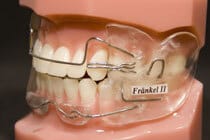
Frännkel II appliance. In: KFO Dr. Dr. Greuner. Herausnehmbare Zahnspangen.
FR-III treated Class III by influencing maxillary development.

Frännkel III appliance. In: Der Funktionsregler nach Fränkel Typ FR-3 Teil II
Fränkel’s approach emphasized soft tissue function over direct tooth movement. By altering the “envelope” of oral muscle activity, he aimed for stable skeletal and dental change.
American orthodontists adopted Fränkel’s appliances in the 1970s, often blending them with fixed appliance therapy for comprehensive results.
Clark’s Twin Block — Britain’s Answer to Compliance
In the late 1970s, William Clark of Scotland wanted a functional appliance that patients would actually wear. The result was the Twin Block — two separate acrylic plates (upper and lower) with bite blocks that guided the jaw into a forward position when biting.
The genius was in comfort and usability:
Could be worn full-time, even while speaking.
Incremental advancement allowed gradual adaptation.
Worked well alongside fixed appliances in later treatment phases.

In: Twin-Block
The Twin Block spread rapidly in the UK and, by the 1990s, was embraced in American practices — often for growing Class II patients.
The S-III Appliance (Sander’s Back-Push Double Plate) — Germany’s Answer to Early Class III Therapy
In the 1990s, German orthodontist Franz Günter Sander developed the Rückschubdoppelplatte (S-III appliance) in Ulm as a removable functional device specifically for treating children with early mesial malocclusion (progeny) before the age of nine.
In cases of progene dentofacial development (where the lower jaw is excessively mesially positioned), the S-III appliance guides the mandible posteriorly via interlocking acrylic spurs and adjustable stops, offering a functional alternative to extraoral traction appliances.
Key advantages and features:
Designed for early intervention—ideally before age nine—when skeletal adaptation is more feasible.
Acts both therapeutically and as a retention device, often well tolerated by patients.
Avoids reliance on bulky external devices like face masks or chin-caps.
Useful in cases where the maxilla is underdeveloped, rather than conditions with an over-grown mandible.
Diagnostic and prognostic considerations:
The individualized ANB angle (based on the patient’s SNA and ML–NSL relationship) is used to assess jaw positions.
Prognosis and the success of non-surgical therapy depend on the difference between mandibular and maxillary lengths; in 12-year-olds, a difference of 15–28 mm is considered within the treatable range.
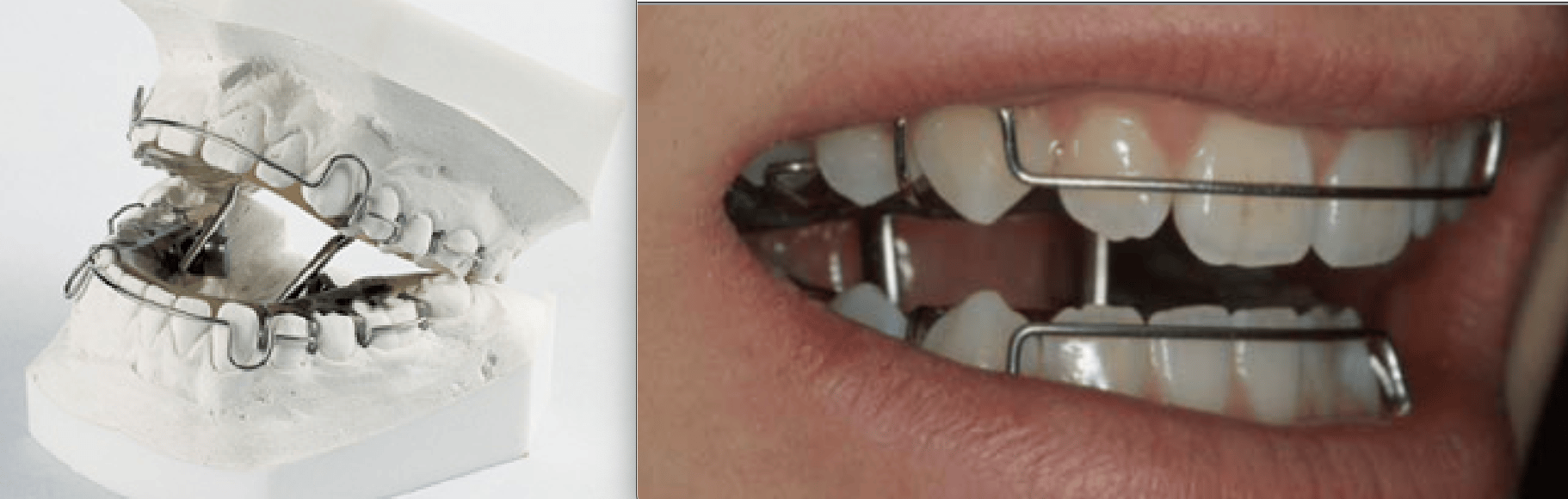
Sander’s Back-Push Double Plate - Effective intraoral correction of dental Class III cases. In: Rückschubdoppelplatte (S-III-Apparatur nach Sander)
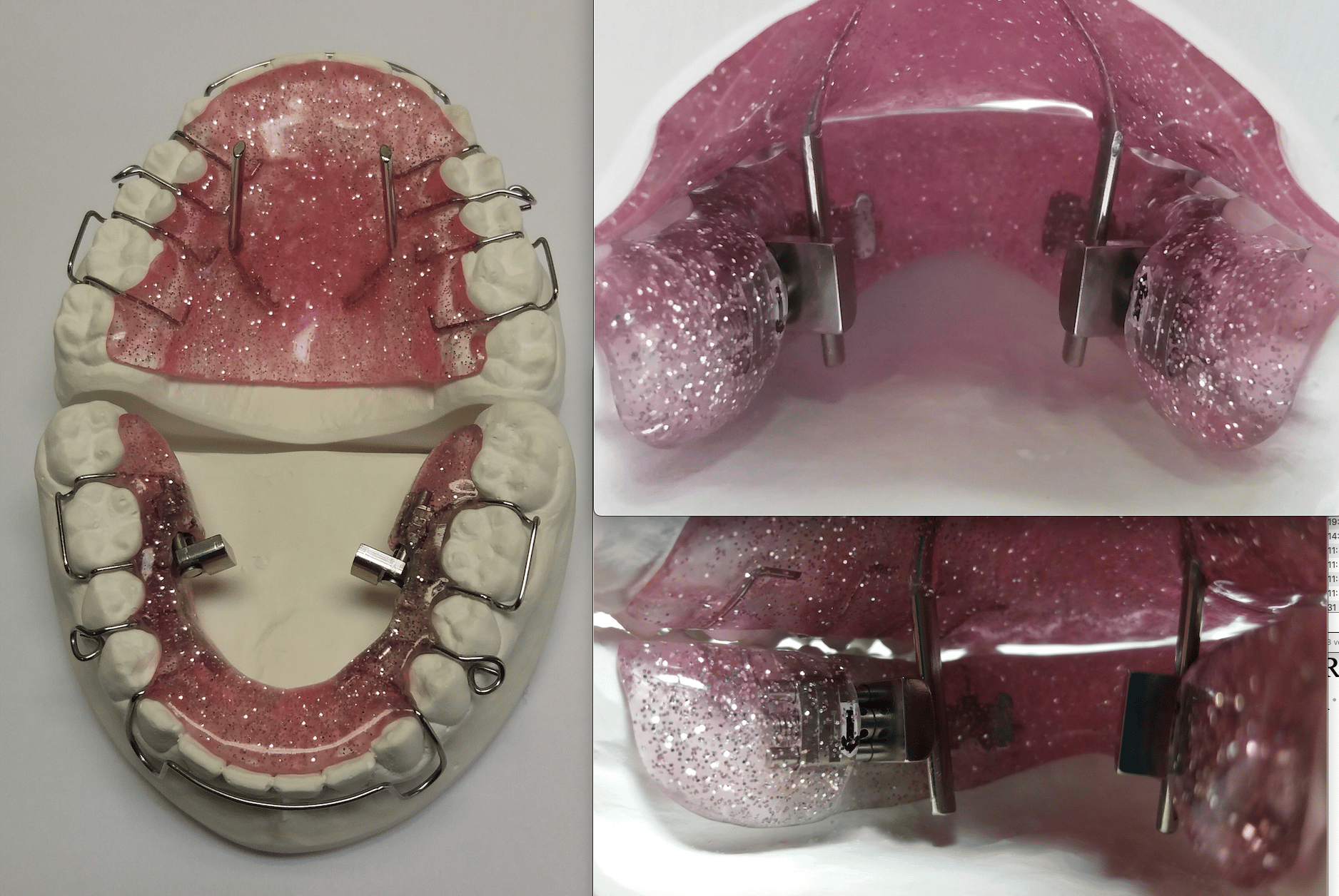
Sander’s Back-Push Double Plate. In: Rückschubdoppelplatte (RDP)
The RMR as class III functional treatment option
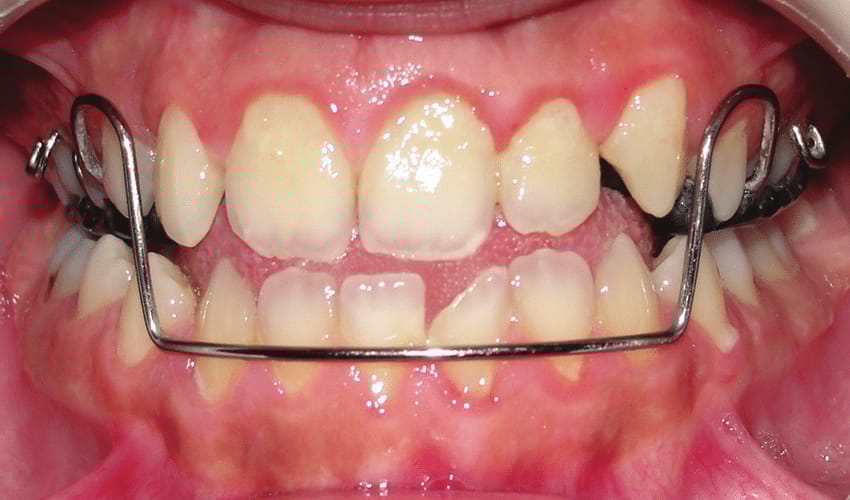
The removable Mandibular Retractor. In: RMR.
In recent studies, A. Majanni and H. Mohammad Y. demonstrated that bone-anchored intermaxillary elastics offer a promising therapeutic approach for growing Class III patients with mild to moderate skeletal discrepancies, proving comparable or superior to the Reversed Maxillary Retractor (RMR) as a functional treatment option.
Their findings reinforce that both bone-anchored elastics and removable functional appliances represent valid alternatives to the traditional Delaire facemask, expanding the orthodontist's armamentarium for managing Class III malocclusions in young patients.
This evolution toward less invasive, more patient-friendly appliances continues the trajectory established by earlier innovators like Sander, who sought to minimize the psychological burden of conspicuous extraoral devices while maintaining therapeutic efficacy.
The Herbst Appliance — Fixed Functional Origins
While the Activator line developed as a removable tradition, Germany also produced a fixed functional design early in the 20th century.
Emil Herbst (1905) introduced a telescoping hinge mechanism fixed to upper and lower molar bands, holding the mandible forward around the clock.
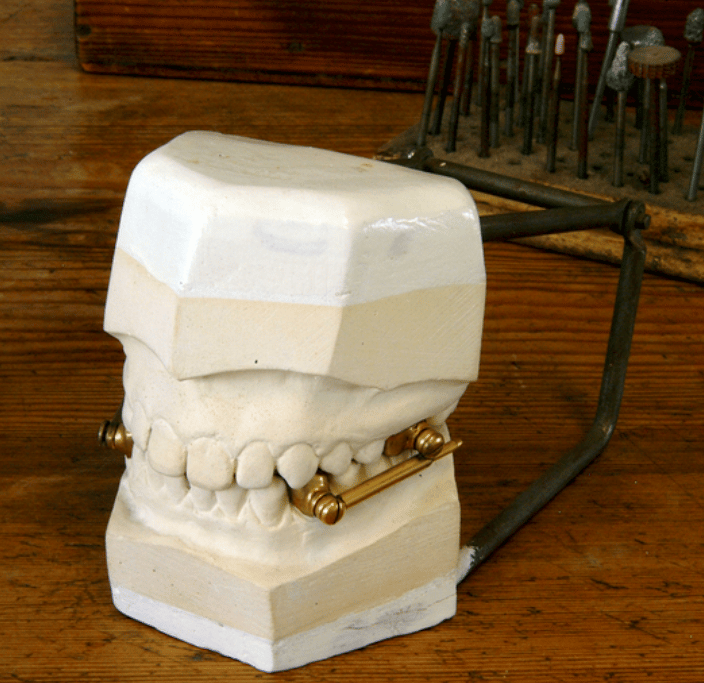
The primordial Herbst-Appliance. In: Das Ur-Herbst-Scharnier
Its fixed nature ensured constant wear — eliminating compliance problems.
After decades of limited use, Hans Pancherz revived the Herbst in 1979 with clinical studies proving its skeletal and occlusal benefits.
The Herbst’s revival marked a parallel to removable functionals: instead of relying on patient discipline, it used mechanical permanence.
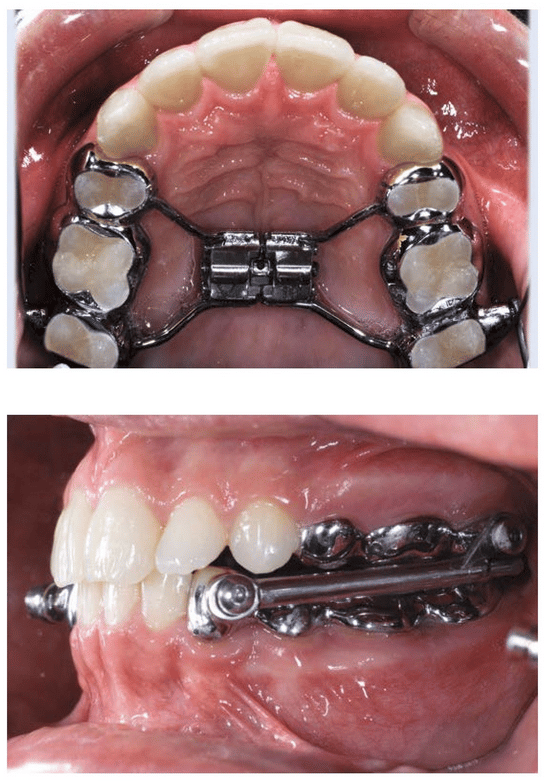
Herbst appliance. In: Therapie der dentalen und skelettalen Klasse II im permanenten Gebiss. Herbst-Apparatur.
Modern Fixed-Functional Hybrids
Today’s orthodontists often combine Herbst principles with contemporary materials and bracket systems. Examples include:
MARA (Mandibular Anterior Repositioning Appliance) — Less bulky, allows gradual mandibular advancement.
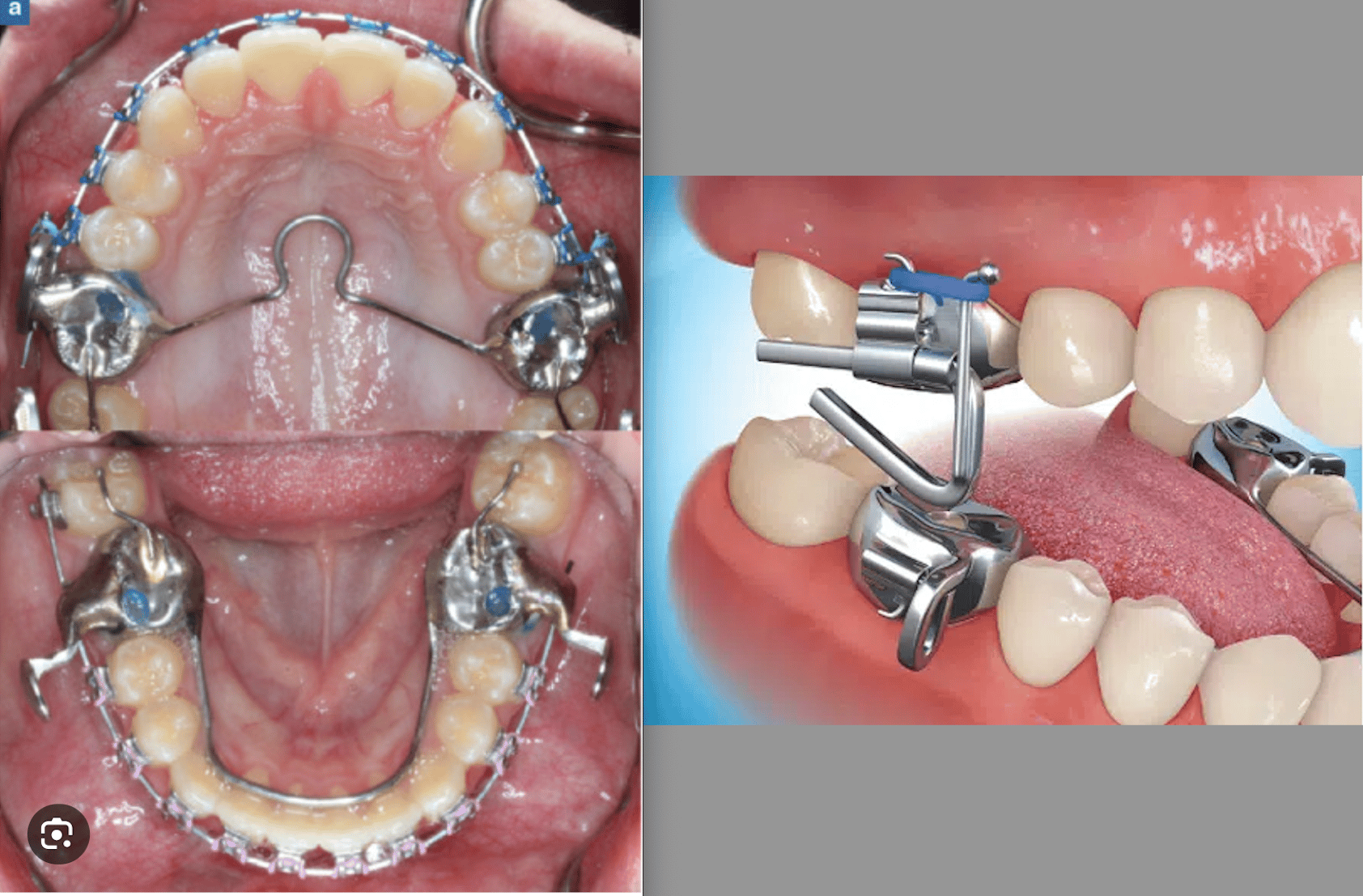
Mara Appliance. In: Mara Appliance & Thikriat Al-Jewair, Mohammadreza Ghorbaniparvar, Lorenzo Franchi, Carlos Flores-Mir, Comparison of…
Jasper Jumper — Flexible push-rods integrated with fixed braces for simultaneous tooth alignment and jaw correction.
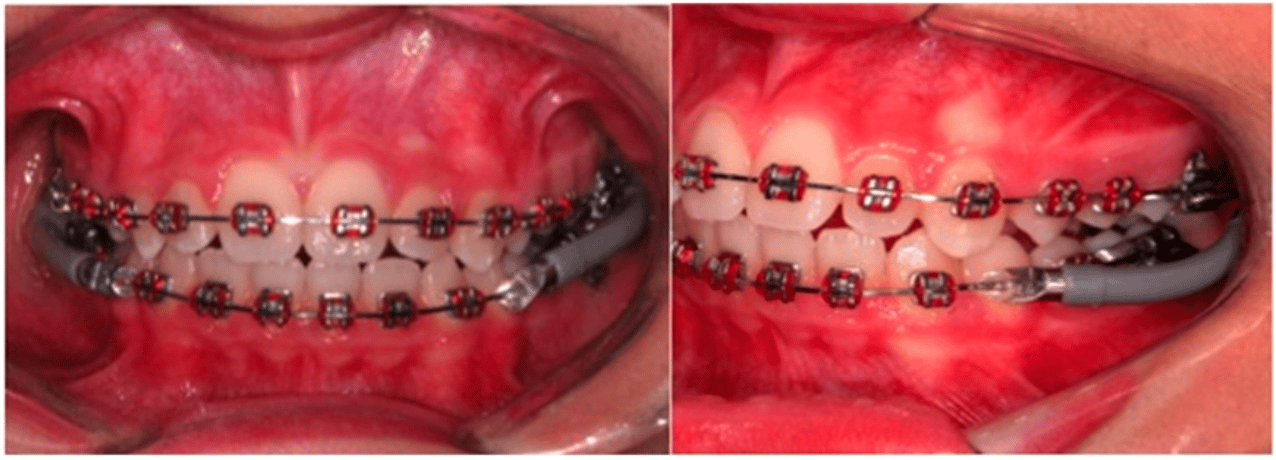
Jasper Jumper appliance. In: Treatment effects of the Jasper Jumper and the Bionator associated with fixed appliances. Neves et al.
Forsus Fatigue Resistant Device — Spring-based system delivering continuous force without patient activation.
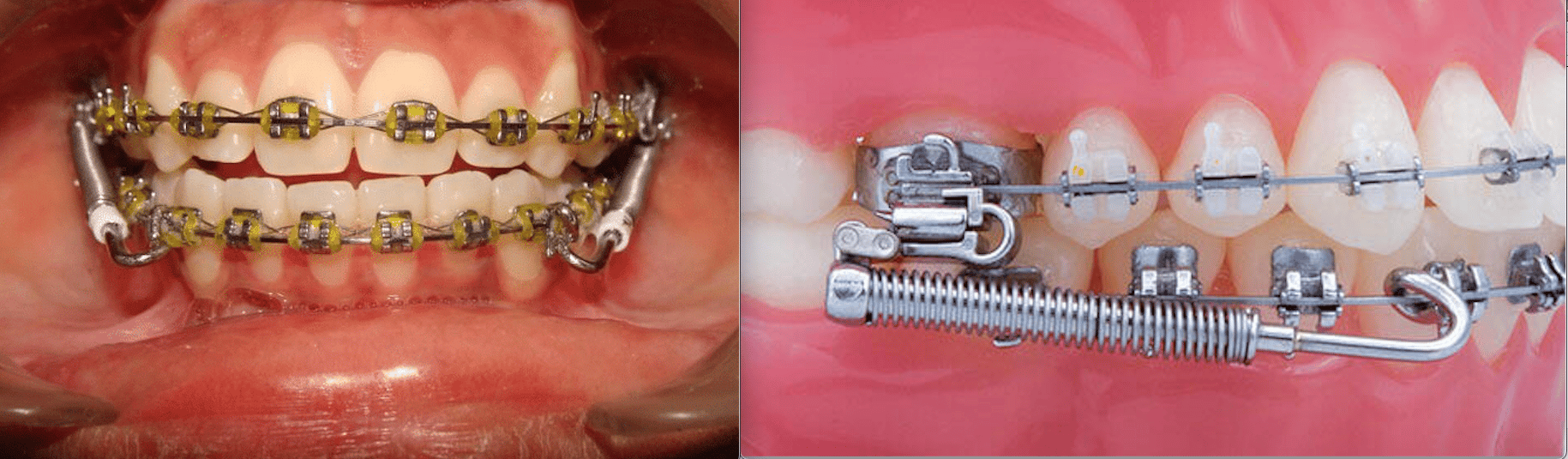
Forsus appliance in situ and model. In: Forsus appliance & Clinical innovation
Carrière Motion 3D Class II Appliance — Uses elastic force and minimal bulk to reposition the mandible before braces.
These devices blend skeletal correction with the efficiency of fixed orthodontics, continuing the fixed-functional lineage started by Herbst.
Lingual Orthodontics — Aesthetic Demands Drive Collaboration
While functional appliances influenced jaw growth, another transatlantic exchange was unfolding in the realm of aesthetics. In the 1970s, European orthodontists in France and Germany refined lingual orthodontics — placing brackets on the tongue side of teeth. By the 1980s, American manufacturers and clinicians were adapting the technique for the U.S. market, catering to adult patients seeking discreet treatment.

Lingual braces in situ. In: Lingual braces; two web sources
Removable Plate Appliances — The Parallel European Branch
While the functional appliance tradition focused on jaw growth, another European innovation was evolving: removable plate appliances. Clinicians like G.V. Adams, with his universally adopted clasp design, made retention reliable. In the 1920s and 30s, pioneers such as Schwarz, Stockfisch, and Tränkmann combined stainless steel wire with acrylic plates to create adjustable devices for minor tooth movement, expansion, and retention.
These appliances became the forerunners of the Hawley retainer and modern acrylic-and-wire designs, serving both as post-treatment retention and, in many cases, active correction. Their influence paralleled the functional appliance story and shaped orthodontic correction and retention philosophy on both sides of the Atlantic.
A Century of Cross-Pollination
From Robin’s Monoblock to Clark’s Twin Block, from Crozat’s lightwire elegance to Fränkel’s tissue training, functional appliance design has never belonged to one continent. Each innovation reflected its inventor’s philosophy, but they all shared one goal: to guide growth and function for lasting dental health.
Between 1930 and 1960, American orthodontics shifted from invention to refinement, all while engaging in a lively exchange of ideas with Europe. From Pierre Robin’s airway-saving monoblock to Fränkel’s muscle-training regulators, functional appliances crossed the Atlantic and took on new life in American practices. This period cemented orthodontics as a global conversation.
📍 Functional Appliance Timeline
1900s — Pierre Robin’s Monoblock (France)
1905 — Emil Herbst’s original Herbst appliance (Germany)
1919 — Crozat Appliance (USA)
1920s — Andresen-Häupl Activator (Denmark/Germany)
1930s — Korkhaus Activator refinements (Germany)
1920s–30s — Schwarz, Adams, Stockfisch, Tränkmann removable plates (Europe)
1950s — Wilhelm Balters’ Bionator (Germany)
1950s–60s — Rolf Fränkel Functional Regulators (East Germany)
Late 1970s — William Clark’s Twin Block (Scotland)
1979 — Hans Pancherz revives Herbst appliance (Germany)
1980s–Present — MARA, Jasper Jumper, Forsus, Carrière Motion (International)
1980s — Lingual Orthodontics refined (France, Germany → USA)
Today — ALF appliance (USA), blending Crozat principles with cranial orthopedics
📚 Sources & References
Primary Historical Sources
Robin, P. (1902). Sur la Respiration nasale et ses Malformations. Paris.
Andresen, V., & Häupl, K. (1936). Funktions-Kieferorthopädie. Leipzig: Thieme.
Herbst, E. (1934). Atlas und Grundriss der Kieferorthopädie. München: Lehmann.
Crozat, G.B. (1919). Technique for Orthodontic Correction without Extraction.
Balters, W. (1950). Der Bionator.
Fränkel, R. (1969). Regulation of Function in Orthodontics.
Clark, W.J. (1988). The Twin Block Technique.
Tweed, C.H. (1944). “The extraction of teeth in orthodontic procedure.” American Journal of Orthodontics and Oral Surgery, 30(8), 405–428.
Wiebrecht, A.T. (1930). Clinical Expansion Techniques with the Crozat Appliance.
Secondary & Contemporary References
Pancherz, H. (1979). “The Herbst appliance – its biologic effects and clinical use.” American Journal of Orthodontics, 76(4), 321–339.
Graber, L.W., Vanarsdall, R.L., Vig, K.W.L., & Huang, G.J. (2016). Orthodontics: Current Principles and Techniques. St. Louis: Elsevier.
Proffit, W.R., Fields, H.W., & Sarver, D.M. (2018). Contemporary Orthodontics. St. Louis: Elsevier.
Wahl, N. (2005). “Orthodontics in 3 millennia. Chapter 3: The rise of the specialists.” American Journal of Orthodontics and Dentofacial Orthopedics, 127(2), 307–315.
Spielman, AI. History of Orthodontics. In: Illustrated Encyclopedia of the History of Dentistry. 2024. https://historyofdentistryandmedicine.com/
Vaden, James L. A century of the edgewise appliance. doi:
10.4103/2321-1407.169949. https://apospublications.com/a-century-of-the-edgewise-appliance/
Brandt, Sidney. JPO Interviews Dr. Charles H. Tweed, Part 3. https://www.jco-online.com/archive/1968/02/81/
Pocket Dentistry. Contemporary fixed appliances. https://pocketdentistry.com/contemporary-fixed-appliances/
British Orthodontic Society. Functional-Appliances: Andresen Activator. https://bos.org.uk/museum-and-archive/appliances-and-equipment/functional-appliances/andresen-activator/
The activator and its modification - A review. Aameer Parkar1, Pavan Kumar Vibhute2, Chetan Patil3, Vinay Umale4*, Balagangadhar. https://ijodr.com/archive/volume/5/issue/2/article/4764/pdf
Bionator. https://de.slideshare.net/slideshow/bionator-258457198/258457198#5
Crozat appliance. Orthodontics. https://www.facebook.com/orthodontics.uk/photos/the-crozat-light-wire-appliance-for-okotoks-orthodontic-patients-wwworthotropics/486395294849755/
Treatment effects of the Jasper Jumper and the Bionator associated with fixed appliances. Neves et al. Progress in Orthodontics 2014, 15:54 http://www.progressinorthodontics.com/content/15/1/54
KFO Dr. Dr. Greuner. Herausnehmbare Zahnspangen. https://www.kfo-wittenberg.de/lose-zahnspange.html
Klasse II-Behandlung Erwachsener mithilfe der MALU-Apparatur. Dr. Jakub Malinowski und Katarzyna Jastrzębska. https://www.zwp-online.info/fachgebiete/kieferorthopaedie/funktions-kfocmd/klasse-ii-behandlung-erwachsener-mithilfe-der-malu-apparatur
Der Funktionsregler nach Fränkel Typ FR-3 Teil II: Herstellung und klinisches Management. Chris Köbel, Christine Fränkel, Christopher J. Lux. https://www. .kfo-koebel.de/webroot/downloads/QZ_KFO_2015_FR3_Teil_2.pdf
Twin-Block. In: https://www.zwp-online.info/fachgebiete/kieferorthopaedie/grundlagen/korrektes-trimmen-von-twin-block-aufbissen
Rückschubdoppelplatte (S-III-Apparatur nach Sander) - RDP: https://www.thieme-connect.de/products/ebooks/lookinside/10.1055/b-0034-45476
Rückschubdoppelplatte nach Sander: https://de.wikipedia.org
Rückschubdoppelplatte (RDP): https://kfo-mittelfranken.de/rueckenschubdoppelplatte-rdp/nggallery/thumbnails
Manufacturing of Sander’s Back-Push Double Plate: https://www.zwp-online.info/fachgebiete/zahntechnik/kieferorthopaedie/die-labortechnische-herstellung-der-rueckschubdoppelplatte
RDP: https://www.uni-ulm.de/fileadmin/_migrated/content_uploads/RDP.pdf
RDP: https://www.froehls.de/geraete/aktiveplatten/rueckschubdoppelplatte.html
RDP: https://kfo-mittelfranken.de/rueckenschubdoppelplatte-rdp
RMR: In: Majanni, Abdulmalek & Hajeer, Mohammad Y. (2016). The Removable Mandibular Retractor vs the Boneanchored Intermaxillary Traction in the Correction of Skeletal Class III Malocclusion in Children: A Randomized Controlled Trial. The Journal of Contemporary Dental Practice. 17. 361-371. 10.5005/jp-journals-10024-1856. https://www.researchgate.net/publication/305480899_The_Removable_Mandibular_Retractor_vs_the_Boneanchored_Intermaxillary_Traction_in_the_Correction_of_Skeletal_Class_III_Malocclusion_in_Children_A_Randomized_Controlled_Trial
Das Ur-Herbst-Scharnier. life-dental - Ihr Partner für modernste, digitale KFO-Technik. https://www.herbst-scharnier.de/historie
Therapie der dentalen und skelettalen Klasse II im permanenten Gebiss. Herbst-Apparatur. In: Wichelhaus, Andrea: 2012 Farbatlanten der Zahnmedizin: Kieferorthopädie – Therapie Band 1 DOI: 10.1055/b-0034-18398. https://www.thieme-connect.de/products/ebooks/lookinside/10.1055/b-0034-18398
Mara appliance: https://windermereorthodontics.com/the-mara-appliance/
Thikriat Al-Jewair, Mohammadreza Ghorbaniparvar, Lorenzo Franchi, Carlos Flores-Mir, Comparison of treatment outcomes with crowned and banded mandibular anterior repositioning appliance (MARA) in Class II pubertal subjects: A retrospective cohort study, International Orthodontics, Volume 18, Issue 2, 2020, Pages 297-307, ISSN 1761-7227, https://doi.org/10.1016/j.ortho.2020.01.009.
Forsus appliance: Clinical Innovation: Activation Beads In Orthodontics, January 2013, IOSR Journal of Dental and Medical Sciences 6(2):35-37. DOI:10.9790/0853-0623537
Forsus appliance: https://www.k-orthodontics.com/technology/forsus/
Lingual braces: https://wahroongadental.com.au/treatments/orthodontics/lingual-braces/
Lingual braces: https://www.parkvieworthodonticsandiego.com/procedures/orthodontics/in-ovation-l-mtm/