- OrthoThrive
- Posts
- History of Amercian Orthodontics 4
History of Amercian Orthodontics 4
The Removable Appliance Revolution: From Schwarz Screws to Clear Retainers — A Century of Acrylic and Wire Ingenuity

Borris Upton
August 10, 2025
A Quiet Revolution in Orthodontics
While the headlines of orthodontic history often feature fixed brackets and functional jaw appliances, a quieter but equally transformative story was unfolding in workshops and laboratories across Europe and the United States. In the first half of the 20th century, orthodontists and dental technicians began experimenting with removable acrylic plates and wire frameworks that could guide teeth, expand arches, and hold results after treatment.
This movement would reshape retention philosophy, expand patient comfort, and redefine what “active treatment” could look like.
Schwarz and the Adjustable Acrylic Plate
In the 1920s and 30s, Austrian orthodontist Wilhelm Schwarz popularized the acrylic plate appliance fitted with an expansion screw. By turning the screw a quarter-turn at prescribed intervals, patients or parents could gradually widen the dental arch at home.
Example: A child with a narrow upper jaw might use a Schwarz plate for several months, creating the space needed for proper eruption of permanent teeth — all without continuous in-office intervention.
Schwarz’s method marked a shift toward patient participation, making orthodontics more accessible and less invasive.
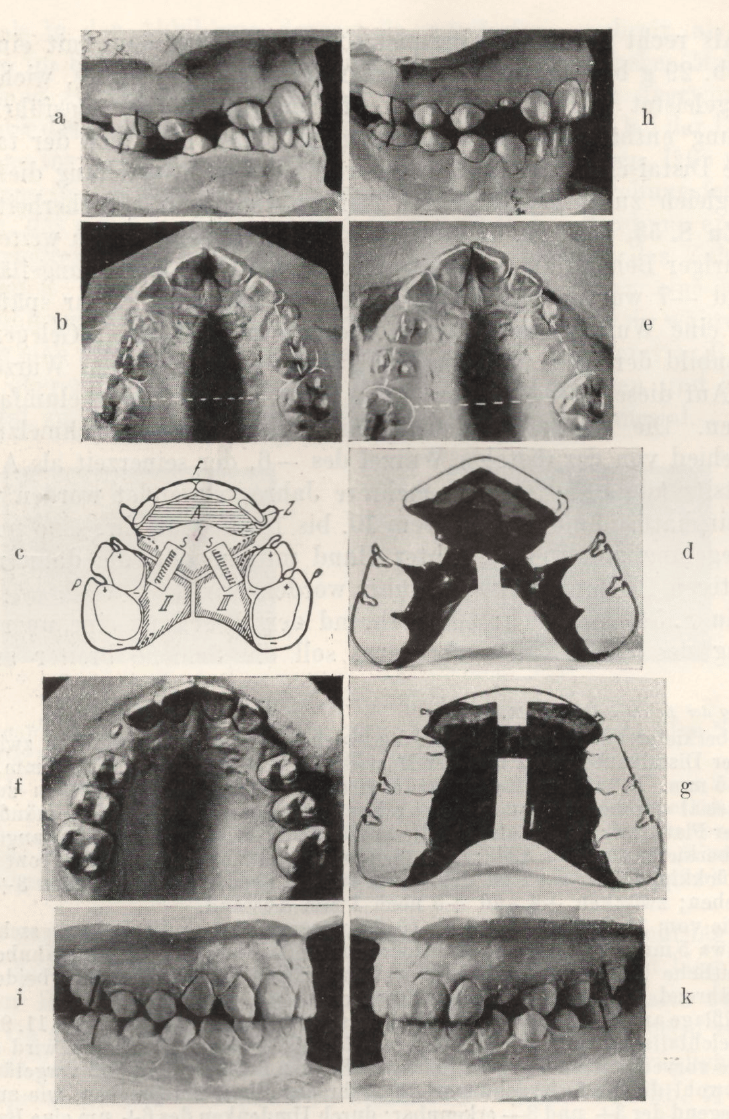
Schwarz acrylic Plate. In: Dr. A. Martin Schwarz (1944)
Adams and the Perfect Clasp
In the 1940s, George Vernon Adams of Liverpool created the Adams clasp, a simple, stainless steel wire clasp that gripped teeth securely yet allowed easy insertion and removal of the appliance. It improved comfort, stability, and durability — qualities that made it the universal clasp design still taught worldwide today.
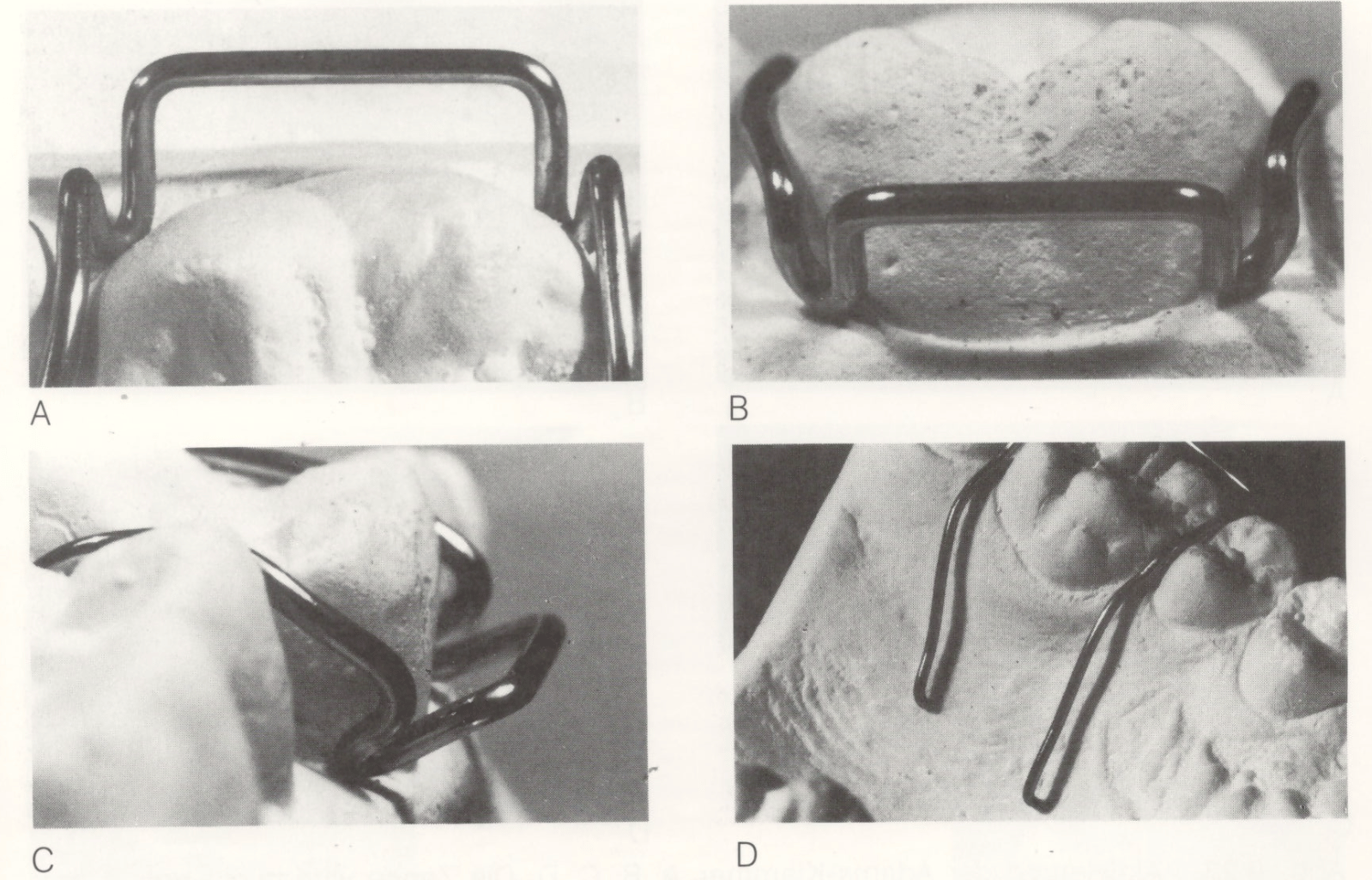
Adams clasp. construction elements. In: C. Philip Adams
Stockfisch and Tränkmann: Engineering Precision
German orthodontists Stockfisch and Tränkmann enhanced plate mechanics with improved expansion screws and wire adaptation. Their multi-directional screw designs allowed for asymmetric expansion or targeted tooth movement, enabling finer, more individualized corrections.
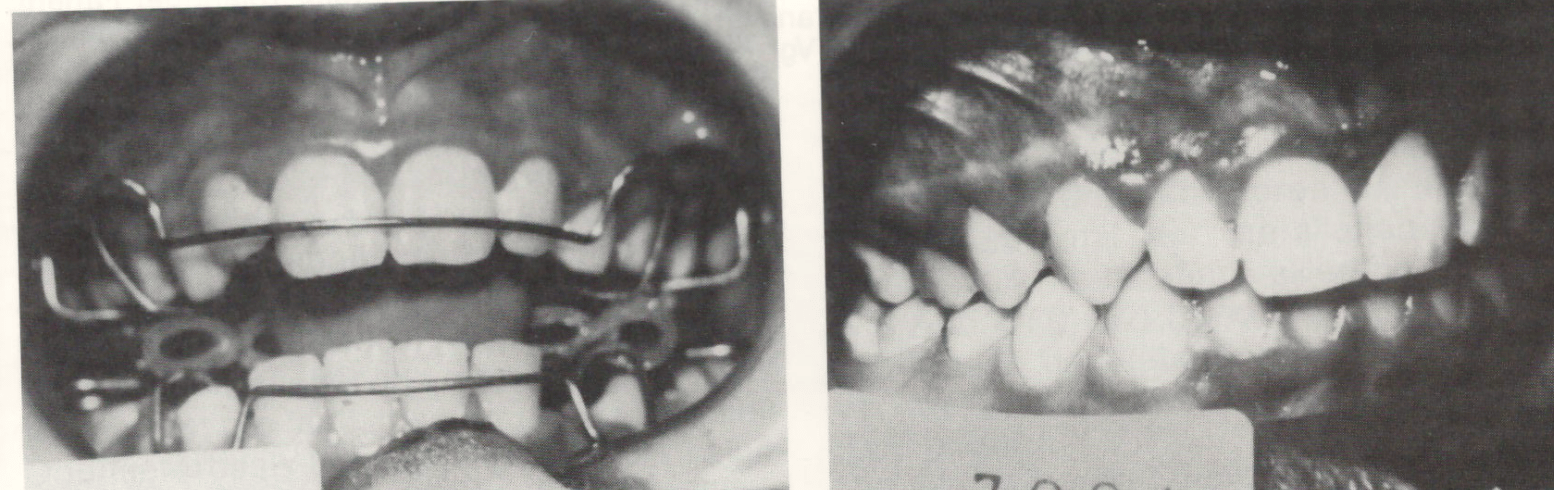
Stockfisch Kinetor, 80s. In: Dr. H. Stockfisch
Example: A Tränkmann plate could rotate one incisor into alignment without affecting the rest of the arch — a level of control previously reserved for fixed appliances.
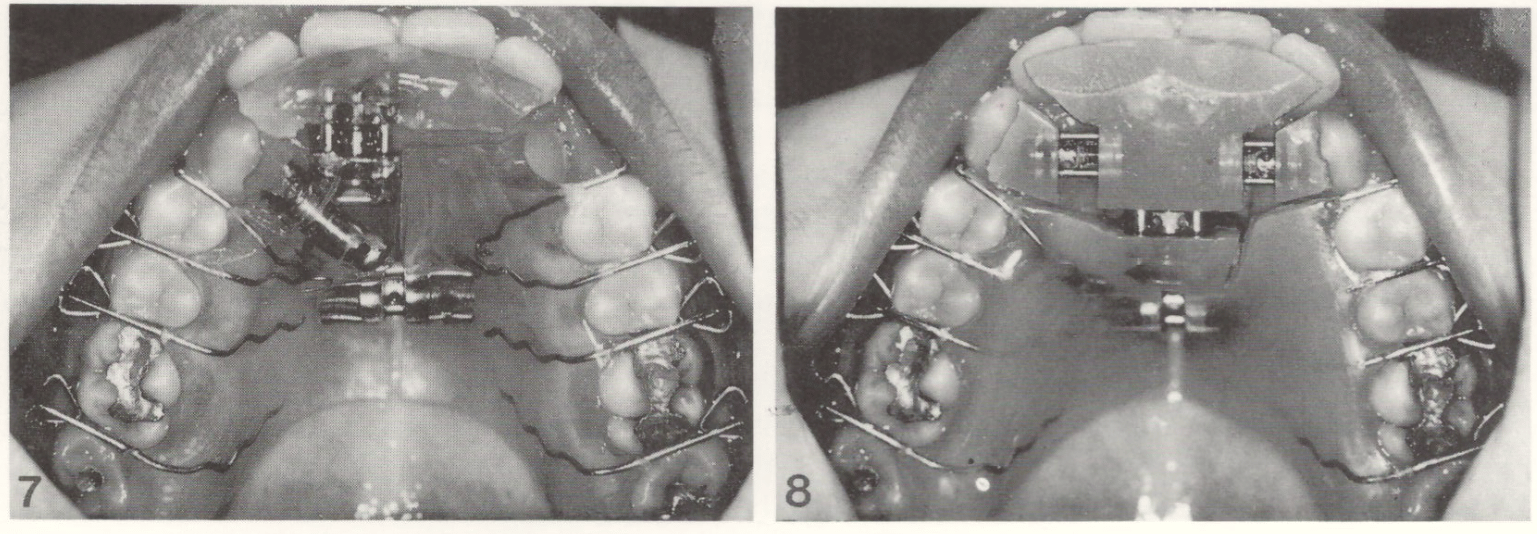
Tränkmann Plate multiple screws. In: Prof. Dr. med. dent. J. Tränkmann.
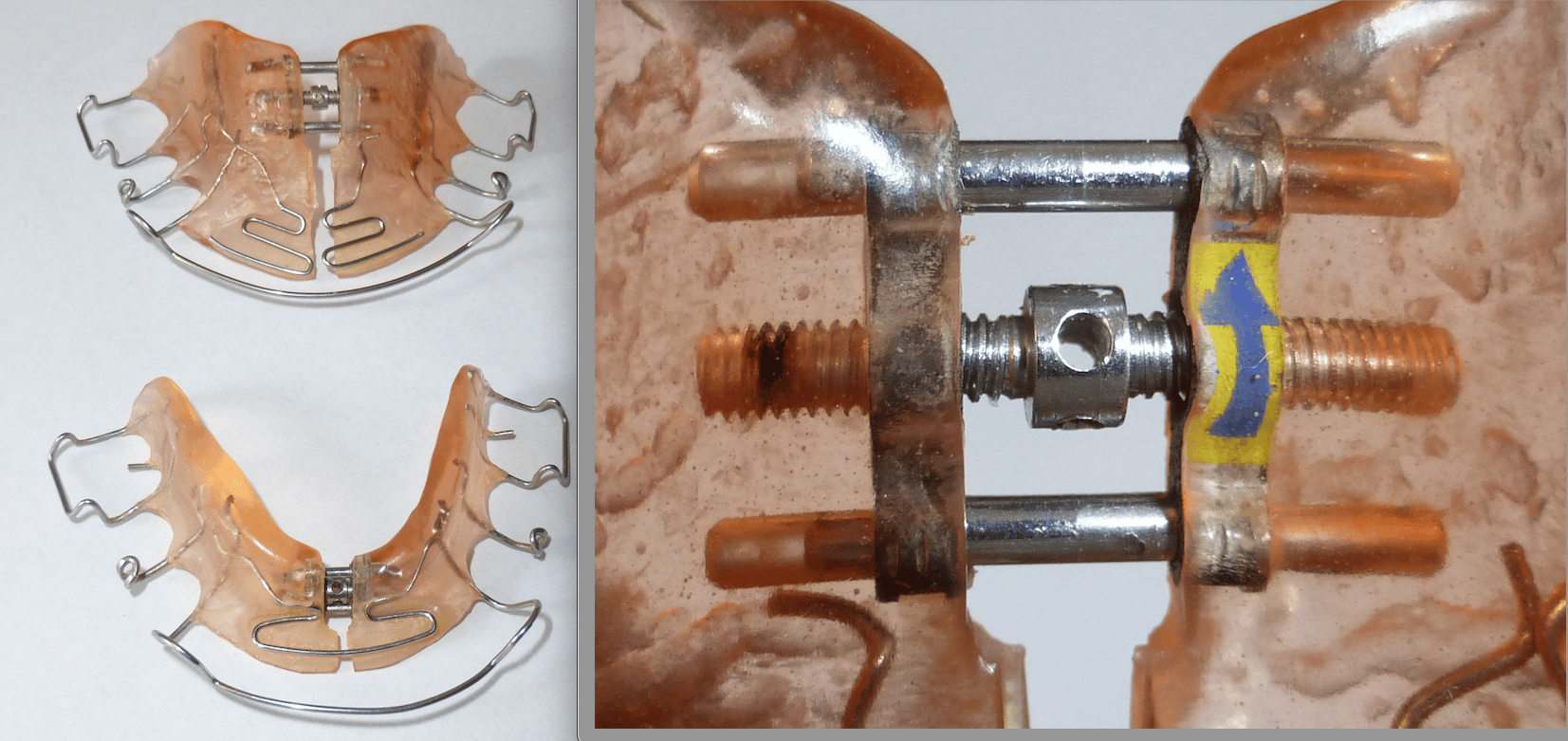
Tränkmann plate in the 80s. In: Aktive Platte
American Voices in the Evolution
While Europe pioneered the acrylic plate, American orthodontists also left their mark:
Charles H. Hawley (USA, 1919) designed the Hawley retainer, a hybrid of acrylic base and labial bow still used today for post-treatment retention. His ideas based on a paper of Dr. R. D. Mc'Bride of Dresden, Germany (1906). Yet, little is know about the German inventor of the modern plate appliance, that followed Kingsley’s ideas from 1880.
Victor Hugo Jackson (USA) experimented with removable expansion devices that foreshadowed Schwarz’s designs.
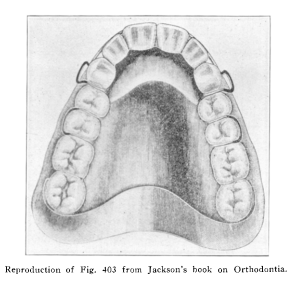
Removable Retainer. In: The International Journal of Orthodontia and Oral Surgery
Alfred Paul Rogers (USA) developed an early removable bite plate in the 1920s for deep bite correction — bridging the gap between functional and retention appliances.
Other Influential Innovators
Philip Adams (UK) refined clasp positioning for greater comfort and stability in removable devices.
Hans Peter Bimler (Germany) created the Bimler appliance, a lightweight wire-and-acrylic hybrid that functioned both as a functional trainer and a retainer, influencing later lightwire and aligner systems.
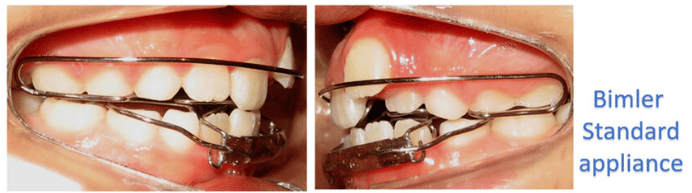
Bimler appliance. In: Terán, Aidé & Compean, Ana & Yañez, Karla & Lloret, Miguel. (2023)
From Active Treatment to Retention
By the mid-20th century, removable plates were used both to guide tooth movement and to stabilize results after treatment. The Hawley retainer, with its adjustable labial bow, became the natural extension of the acrylic plate tradition. This dual role made removable appliances indispensable in orthodontic practice on both sides of the Atlantic.
From Adams to Aligners
Today, the principle behind these early designs — that a removable device can apply controlled forces — has evolved into modern clear aligner therapy. While the materials have changed, the foundational ideas from Schwarz, Adams, Hawley, and others remain central to orthodontic innovation.
Closing Thought
The story of removable appliances is not one of a single invention, but of cumulative ingenuity — of European precision blending with American adaptation, of simple wires and screws giving rise to digital, 3D-printed aligners. It’s a story of patient comfort meeting biomechanical sophistication, a legacy that continues to shape orthodontics.
📚 Sources & References
Primary Historical Sources
Schwarz, W. (1930s). Development of Removable Plate Appliances.
Adams, G.V. (1940s). Design and Use of the Adams Clasp.
Hawley, C.H. (1919). A removable retainer. Dental Cosmos.
Stockfisch, K., & Tränkmann, H. (1950s). Advances in Screw and Spring Mechanics.
Rogers, A.P. (1920s). Removable bite plate for deep bite correction.
Bimler, H.P. (1950s). Functional-orthodontic appliance design.
Secondary & Contemporary References
Wahl, N. (2005). “Orthodontics in 3 millennia. Chapter 3: The rise of the specialists.” American Journal of Orthodontics and Dentofacial Orthopedics, 127(2), 307–315.
Graber, L.W., Vanarsdall, R.L., Vig, K.W.L., & Huang, G.J. (2016). Orthodontics: Current Principles and Techniques. St. Louis: Elsevier.
Proffit, W.R., Fields, H.W., & Sarver, D.M. (2018). Contemporary Orthodontics. St. Louis: Elsevier.
Dr. A. Martin Schwarz (1944). Gebißregelung mit Platten. Berlin / Wien. S. 131
C. Philip Adams. Kieferorthopädie mit herausnehmbaren Geräten. Berlin, Chicago, London, Sao Paulo, Tokio 1988. S. 211
Dental materials: The Adams family. https://www.nature.com/articles/bdjteam2014133
Dr. H. Stockfisch. Rationelle Kieferorthopädie. Berlin, Chicago, London, Rio de Janeiro, Tokio 1985. S. 327
Prof. Dr. med. dent. J. Tränkmann. Die Plattenapparatur in der Kieferorthopädie. Berlin, Chicago, London, Rio de Janeiro, Tokio 1985. S. 174
Aktive Platte: https://de.wikipedia.org/wiki/Aktive_Platte
Bimler Appliance. In: Terán, Aidé & Compean, Ana & Yañez, Karla & Lloret, Miguel. (2023). Lower canine traction with jaw functional orthopedics. case report. Jaw Functional Orthopedics and Craniofacial Growth. 3. 10.21595/jfocg.2023.23554. https://www.researchgate.net/publication/375365006_Lower_canine_traction_with_jaw_functional_orthopedics_case_report
C.A. Hawley. A Removable Retainer (1919). In: The International Journal of Orthodontia and Oral Surgery. St. Louis. https://ia600607.us.archive.org/view_archive.php?archive=/8/items/crossref-pre-1923-scholarly-works/10.1016%252Fs1072-3471%252815%252980066-2.zip&file=10.1016%252Fs1072-348x%252819%252980039-6.pdf