- OrthoThrive
- Posts
- History of Amercian Orthodontics 5
History of Amercian Orthodontics 5
Digital Disruption & New Appliances (2000–Present) - How Software, Scanners, and Smart Materials Redefined Orthodontics

Borris Upton
August 11, 2025
The Computer Becomes the Orthodontist’s Partner
The turn of the millennium brought a shift that was as much cultural as it was technological. Orthodontics moved from analog to digital in less than two decades. Plaster models gave way to intraoral scans. Bracket placement and tooth movement could be planned in virtual 3D before a single appliance was placed. Artificial intelligence began to assist in treatment simulations, turning the computer into a trusted partner in diagnosis, planning, and execution.
Part 1 — Aligners Change the Game
In 1997, Stanford graduates Zia Chishti and Kelsey Wirth introduced Invisalign — a clear, removable alternative to braces. What began as a Silicon Valley startup quickly evolved into a global industry category.
Impact on Patients: Clear aligners met a growing demand for discreet orthodontics, especially among adults. No dietary restrictions, no metal brackets — a lifestyle treatment.
European Counterparts: Companies like ClearCorrect and Smilers (France) introduced their own systems, and laboratories in Germany and Switzerland began offering custom aligner services to local orthodontists.
Shift in Expectations: Aligners set a new benchmark for comfort and appearance, influencing even fixed appliance designs to become smaller and more aesthetic.
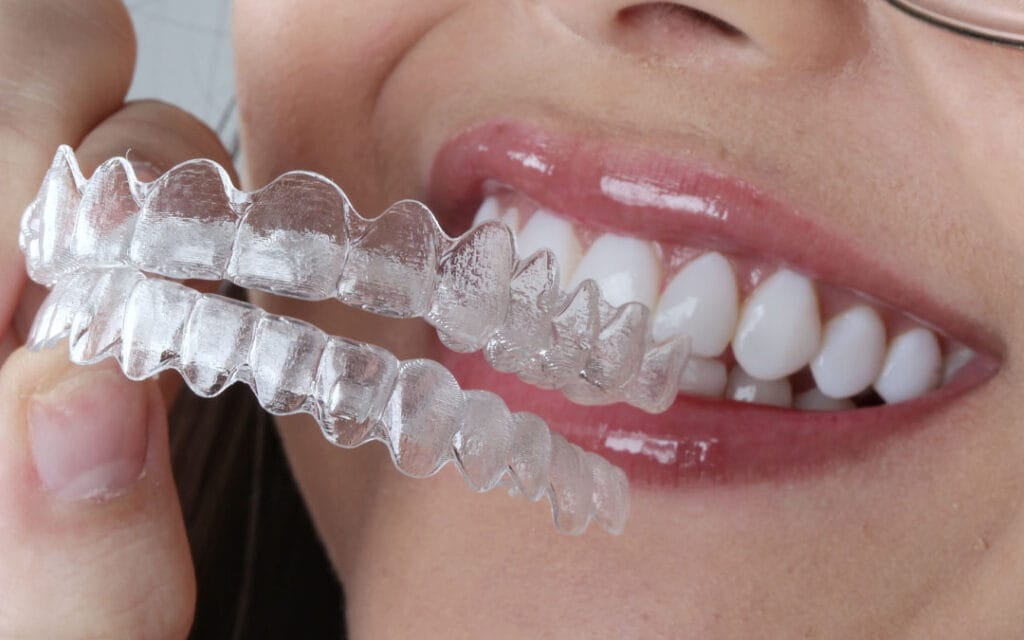
In: Invisalign
Part 2 — Imaging and Planning Revolution
Orthodontics no longer relied solely on 2D radiographs and plaster study models.
Cone Beam Computed Tomography (CBCT): Provided three-dimensional images of teeth, bone, and airway structures, improving diagnosis of impacted teeth, TMJ disorders, and skeletal discrepancies.
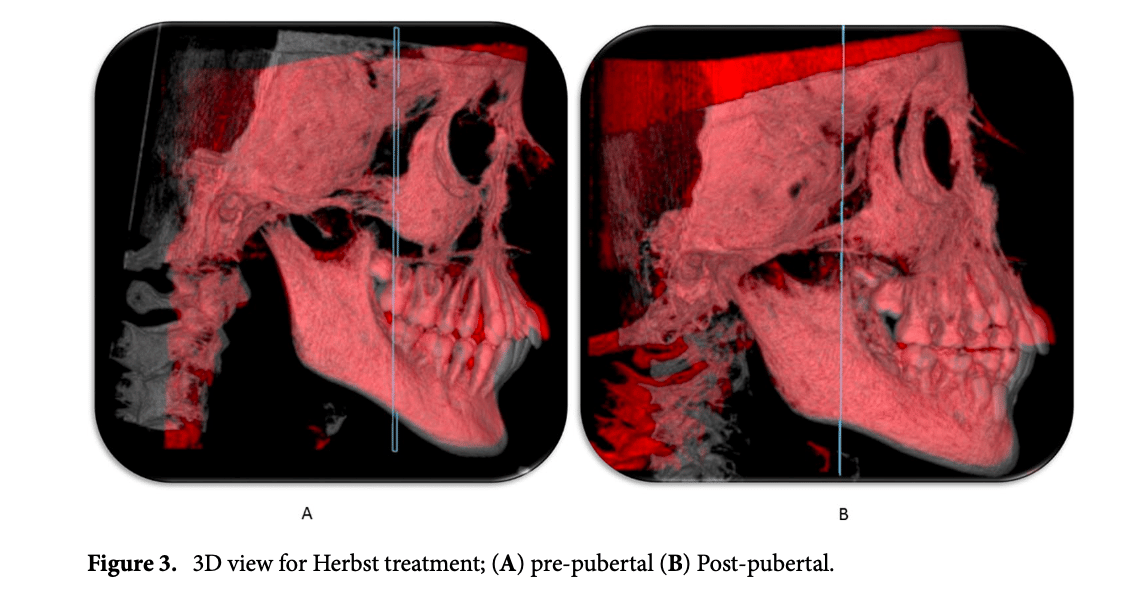
CBCT scanning. In: Farouk, K., Eissa, O., Ghoneima, A. et al. T
CAD/CAM Bracket Design: Custom systems like Insignia allowed orthodontists to design brackets and wires digitally for each patient’s anatomy.
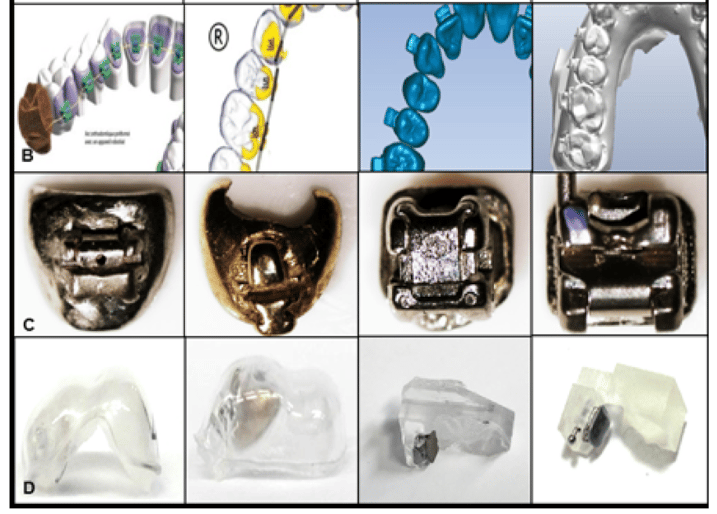
In: CAD/CAM-based customized orthodontic brackets. B, design; C, fabrication; D, Transfer tray.
Virtual Treatment Simulations: Software platforms let practitioners and patients preview the end result before treatment began, increasing patient engagement and case acceptance.
Part 3 — Advanced Anchorage and Bracket Systems
Digital planning was only part of the transformation — new hardware expanded what was biomechanically possible.
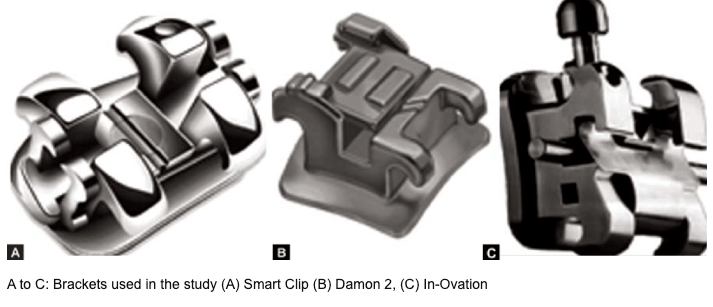
Self-Ligating Brackets: Brands like Smart Clip, Damon, In-Ovation, eliminated the need for elastic ligatures, reducing friction and potentially shortening treatment time.
Temporary Anchorage Devices (TADs) - A pardigm shift: Small titanium screws placed in the jawbone to serve as fixed points for complex tooth movements. Widely adopted in the early 2000s, TADs allowed for molar intrusion, distalization, and other movements that were once surgical challenges.
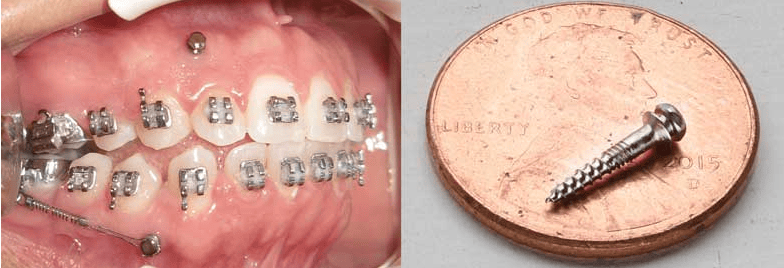
TAD's in situ. In: The benefits of TADs in orthodontics.
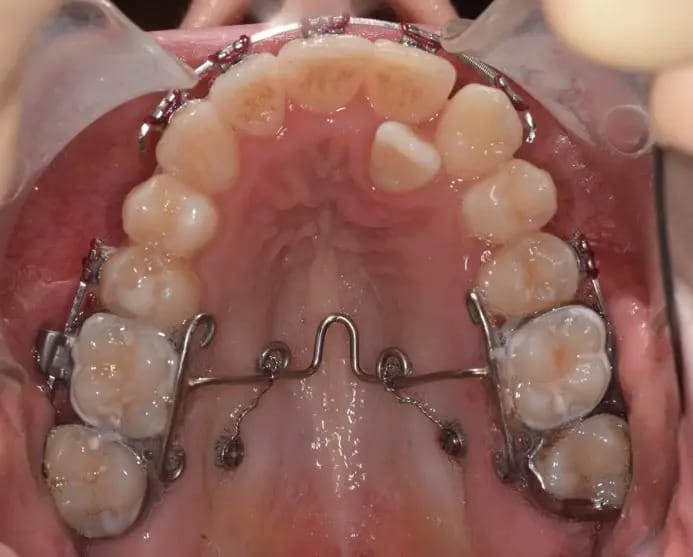
In: Temporary anchorage devices: a paradigm shift.
This paradigm shift is also reflected in the work of Dr. Aiman Obeid (UEA/Sharjah).
While American orthodontists were using TADs primarily for anchorage, international innovators pushed the boundaries through creative digital integration. Dr. Aiman Obeid of Sharjah, UAE, emerged as a pioneer in digitally-planned TAD applications, developing protocols that transformed complex movements into predictable outcomes. His conference presentations demonstrated novel approaches to deep bite correction, maxillary molar distalization, and space closure using TADs—including his innovative "spider distalizer" device. Perhaps most notably, his protocols for closing spaces from congenitally missing lateral incisors using strategic TAD placement offered patients an alternative to implants or bridges, preserving their natural dentition through carefully orchestrated tooth movement.
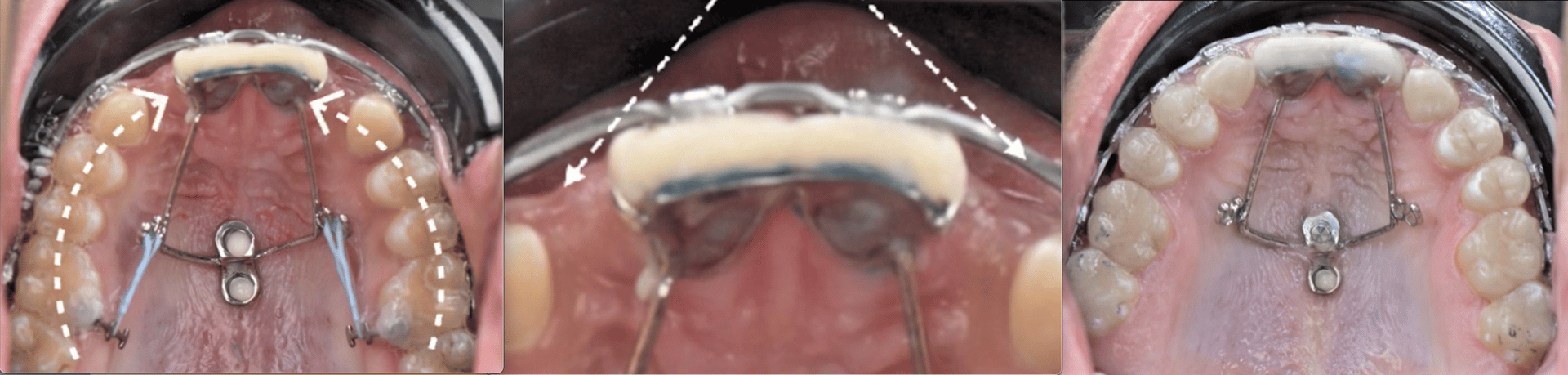
Closing missed lateral gaps utilizing digital worklow. In: Dr. Aiman Obeid (UEA/Sharjah)
Through educational videos and international conference circuits, Obeid showcased how strategic TAD placement, guided by digital planning, could achieve movements that traditionally required more invasive interventions. His contributions, while primarily shared through conference proceedings rather than peer-reviewed journals, represented the new model of orthodontic innovation in the digital age: rapid dissemination through online platforms and international meetings rather than traditional academic publishing.
This shift in how orthodontic techniques spread globally—from Obeid's Sharjah clinic to conference halls in Europe and America—exemplified how the 21st century transformed orthodontics into a truly interconnected specialty. No longer bound by journal publication timelines, innovators could share clinical breakthroughs in real-time, accelerating the evolution of TAD applications worldwide. And this real-time sharing was just the beginning of how digital technology would reshape orthodontic practice.
Part 4 — Globalized Digital Workflows
The digital shift also erased borders in orthodontic collaboration.
Real-Time Lab Collaboration: An orthodontist in Boston could scan a patient's teeth in the morning and send the data instantly to a design team in Madrid or Berlin.
Cloud-Based Treatment Planning: Platforms like ClinCheck and 3Shape Ortho Analyzer stored cases online, allowing multiple specialists to contribute input without shipping physical models.
Integrated Manufacturing: 3D printing, milling, and robotic wire bending became standard tools in U.S., European and worldwide labs, ensuring identical production quality worldwide.
Closing Thought
The 21st century hasn’t replaced orthodontists with machines — it has amplified their capabilities. Today’s practitioners blend the art and biology of tooth movement with the precision and efficiency of digital tools. From clear aligners to AI-driven treatment simulations, the pace of innovation shows no sign of slowing. The next frontier may already be in the works, on a server or 3D printer somewhere across the globe.
📚 Sources & References
Primary & Contemporary Sources
Chishti, Z., & Wirth, K. (1997). Invisalign concept patent filings.
Damon, D.H. (1998). The Damon System of self-ligating brackets.
Kapila, S.D., Nervina, J.M. (2015). “CBCT in orthodontics: assessment of treatment outcomes and indications for its use.” Dental Clinics of North America, 58(3), 573–595.
Graber, L.W., Vanarsdall, R.L., Vig, K.W.L., & Huang, G.J. (2016). Orthodontics: Current Principles and Techniques. St. Louis: Elsevier.
Proffit, W.R., Fields, H.W., & Larson, B.E., & Sarver, D.M. (2023). Contemporary Orthodontics. 7th ed. St. Louis: Elsevier.
Invisalign: https://nadjagurgel.com.br/invisalign-o-que-e-e-qual-as-vantagens-do-tratamento/
CBCT scanning. In: Farouk, K., Eissa, O., Ghoneima, A. et al. Treatment effects of Herbst appliance in skeletal Class II cases during pre-pubertal and post-pubertal periods: a cone-beam computed tomographic study. Sci Rep 13, 11342 (2023). https://doi.org/10.1038/s41598-023-37394-5. https://www.nature.com/articles/s41598-023-37394-5#citeas
CAD/CAM-based customized orthodontic brackets. In: Sha, Ha-Na & Choi, Sung-Hwan & Yu, Hyung-Seog & Hwang, Chung-Ju & Cha, Jung Yul & Kim, Kwang-Mahn. (2018). Debonding force and shear bond strength of an array of CAD/CAM-based customized orthodontic brackets, placed by indirect bonding- An In Vitro study. PLOS ONE. 13. e0202952. 10.1371/journal.pone.0202952. https://www.researchgate.net/publication/327587348_Debonding_force_and_shear_bond_strength_of_an_array_of_CADCAM-based_customized_orthodontic_brackets_placed_by_indirect_bonding-_An_In_Vitro_study
The benefits of TADs in orthodontics. https://www.ismilespecialists.com/what-are-tads-orthodontics-houston-tads
Temporary anchorage devices: a paradigm shift. In: https://www.dmkortho.gr/en/temporary-anchorage-devices-tads/
Dr. Aiman Obeid (UEA/Sharjah) - Closing missed lateral gaps utilizing digital worklow. https://www.scitechnol.com/proceedings/mini-implants-to-reduce-tmj-complications-13812.html; & https://www.omicsonline.org/conference-proceedings/title-an-easy-way-to-braces-system.pdf; & https://www.linkedin.com/feed/update/urn:li:activity:7380955175538221056/
Self-ligating Bracket Systems. In: Singla, Divya & Manohar, Mala & Singla, Litesh & Shivaprakash, G. (2013). An Evaluation of Efficiency and Effectiveness of Self-ligating Bracket Systems: A Prospective Clinical Study. The Journal of Indian Orthodontic Society. 47. 75-82. 10.5005/jp-journals-10021-1133. https://www.researchgate.net/publication/271257949_An_Evaluation_of_Efficiency_and_Effectiveness_of_Self-ligating_Bracket_Systems_A_Prospective_Clinical_Study