- OrthoThrive
- Posts
- History of Amercian Orthodontics 6
History of Amercian Orthodontics 6
Summary overview - A Two-Way Street: The Transatlantic Exchange in Orthodontics From Paris to Pasadena, Glasgow to Chicago, Helsinki to Houston — A Century of Shared Orthodontic Innovation

Borris Upton
August 11, 2025
The Atlantic as a Conduit, Not a Divide
The history of orthodontics is not a one-way journey from Europe to America or the other way around. It is a constant, bidirectional flow of ideas, techniques, and technology. Innovations that began in Paris or Copenhagen found their way to Boston and Los Angeles, where they were refined and sent back across the ocean in new forms. The Atlantic has been less a barrier than a bridge, carrying orthodontic thought in both directions.
Europe’s Early Influence on America
In the 18th and 19th centuries, foundational ideas in orthodontics were seeded in Europe:
Pierre Fauchard introduced the bandeau in France, setting the stage for arch expansion concepts.
Christophe-François Delabarre published one of the earliest malocclusion classifications in 1819, decades before Angle refined it.
J.M. Alexis Schange described using rubber elastics to move teeth in 1841, a concept still core to orthodontics today.
These ideas reached the United States through translated texts, dental journals, and traveling practitioners, inspiring pioneers like Norman W. Kingsley, whose artistic sensibility merged with mechanical precision. Kingsley’s and his peers’ work became a uniquely American synthesis of European science and artistry.
American Innovations Crossing to Europe
By the late 19th century, the flow began reversing.
Edward H. Angle’s 1899 classification distilled malocclusion into Class I, II, and III, creating a universal diagnostic shorthand. While Delabarre’s system had laid the groundwork, Angle’s version achieved global dominance for its simplicity and reproducibility.
Angle’s appliances — from the E-Arch to the Edgewise — redefined mechanical control in tooth movement.
Charles Tweed’s extraction philosophy, though controversial, shaped treatment planning on both continents, particularly in cases requiring profile improvement.
Later, American “straight-wire” systems standardized bracket prescriptions and wire sequences, which European orthodontists readily adopted.
Mid-Century Collaboration
From the 1940s to the 1970s, transatlantic cooperation intensified:
Cephalometrics and growth studies conducted in the U.S. (Broadbent) and Europe (Björk) influenced diagnostic protocols worldwide.

Skeletal-and-dental-angular-measurements. In: Farouk, K., Eissa, O., Ghoneima, A. et al.
Bracket design improvements — such as precision slot manufacturing and soldered attachments — traveled in both directions.
Functional appliance theory from Viggo Andresen in Denmark and Harold Kesling’s positioners in the U.S. both shaped modern orthodontic biomechanics.
Late 20th to 21st Century Synergy
In the final decades of the 20th century, orthodontics entered an era of rapid, reciprocal exchange:
European lingual orthodontics, pioneered in France and Germany, found eager adopters in U.S. practices.
American appliance systems like MBT and Damon influenced bracket choices in European clinics. See also the ongoing discussion about the differences in outcome and effectifness of used bracket systems, e.g. In: Roth versus MBT.
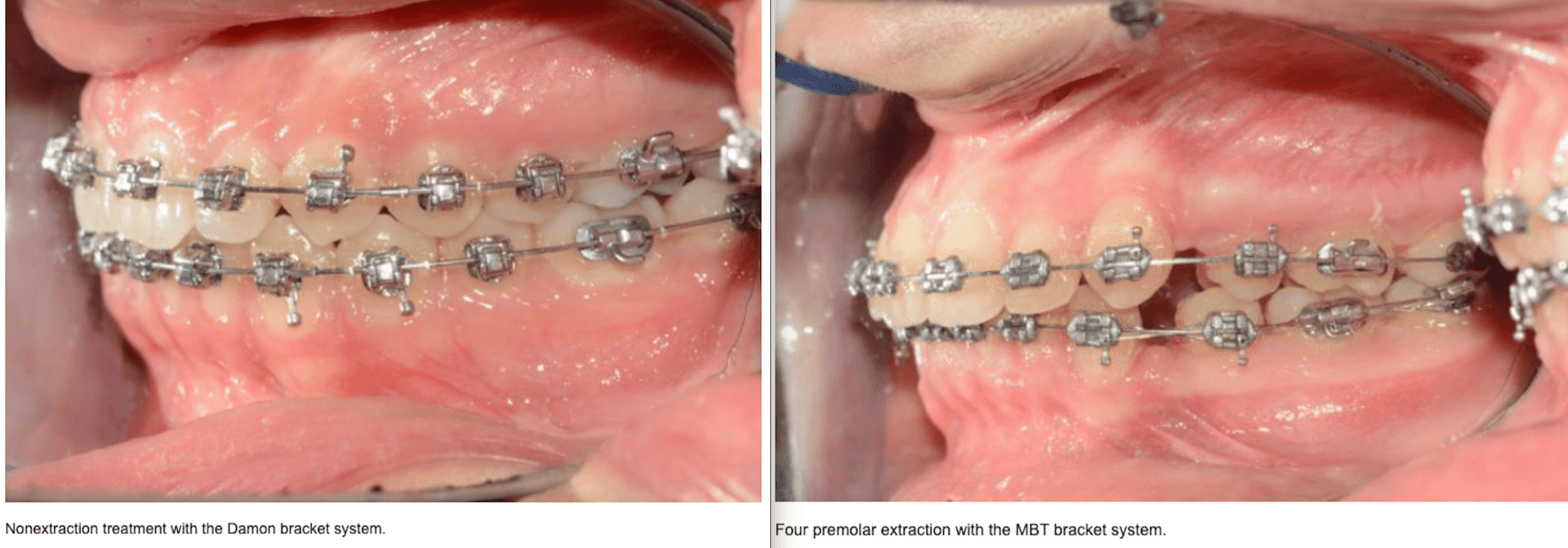
In: Damon & MBT Bracket System.
Functional appliances such as the Twin Block (Scotland) and Fränkel Regulator (East Germany) crossed westward, becoming staples in U.S. pediatric orthodontics.
Digital Era Exchange
Today’s innovations leap across the Atlantic in real time:
Clear aligner systems evolved in parallel — with Invisalign in the U.S. and multiple European competitors developing proprietary staging and movement algorithms.
Shared digital workflows, standardized file formats (like STL for scans), and cloud-based planning platforms allow U.S. and European labs to co-create appliances within hours.
Compliance: The Invisible Variable in Aligner Success
The success of clear aligner therapy, whether in the U.S. or Europe, depends less on the material or software and more on patient compliance.
Wear Time Reality: Aligners must be worn 20–22 hours per day to achieve predicted movements. Incomplete wear can derail even the most precise treatment plan.
Monitoring Tools: Companies now integrate compliance trackers — from embedded RFID chips to app-based selfie checks — to help patients stay on track.
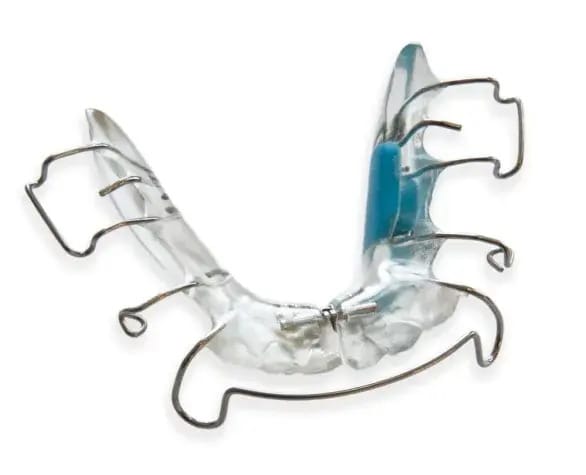
TheraMon-System wearingtime microsensor. In: Das offen PR-Portal
Cultural Differences: Studies show varying compliance rates between countries, influenced by patient age, lifestyle, and orthodontist follow-up style.
In both continents, orthodontists are increasingly blending digital monitoring with motivational strategies to ensure that the technology’s promise matches the clinical outcome. Yet, dropout rates are a topic with all removable appliances, e.g. Invisalign.
A New Frontier: Early Childhood Intervention
Early interceptive treatments, representing Phase 1 orthodontics for children aged 6-10, guide jaw growth and permanent tooth eruption. These proactive interventions correct developing bite issues while preventing future complications that might otherwise require complex orthodontic treatments including extractions or surgery. Common modalities include palatal expanders, space maintainers, and custom appliances that establish healthier foundations for lifelong oral health.
These early treatment interventions have long been a shared interest, but the 21st century has brought a new wave of preformed appliances designed for the early mixed dentition.
One notable European innovation is the LM-Activator, developed in Finland by LM-Dental:
What It Is: A prefabricated silicone appliance, shaped to guide both jaws and teeth during early growth.
When It’s Used: Most effective when the first permanent teeth erupt — typically ages 6–8.
How It Works: Functions as both an aligner and a functional appliance, influencing jaw posture, muscle activity, and tooth alignment.
Advantages: Simple to use, well-tolerated, and able to prevent or reduce developing malocclusions without complex hardware.
Clinical Niche: Fits within the tradition of functional orthodontics that began with Pierre Robin’s Monoblock and Viggo Andresen’s Activator, now adapted for a modern, preventive focus.

LM-Activator. In: My LM-Activato
Similar innovations have emerged globally, with Australia's Myobrace system offering another prefabricated silicone approach that combines myofunctional therapy principles with dental alignment.
Its growing adoption in both Europe, North America and in the Arabic world suggests that early, minimally invasive guidance will be a bigger part of orthodontics’ future — a development as transatlantic as the history that preceded it.
A New Frontier: Epigenetic Orthodontics and TMJ Treatment
Early intervention represents one frontier in orthodontics. Another emerging area bridges orthodontics with systemic health through epigenetic approaches to TMJ disorders.
The DNA appliance is a removable device that uses the body's natural genetic potential to remodel jaw structures and airways. Developed from European functional appliance philosophy and American biomechanical precision, this approach stimulates genetic expression that governs craniofacial development. Traditional orthodontics moves teeth through existing bone; epigenetic appliances work differently.
Clinical Applications:
TMJ Relief: Repositions the jaw and remodels the temporomandibular joint space to address root causes
Sleep Disorders: Expands airways naturally, reducing sleep apnea symptoms
Holistic Approach: Treats the pharynx, autonomic nervous system, and jaw alignment as an integrated system
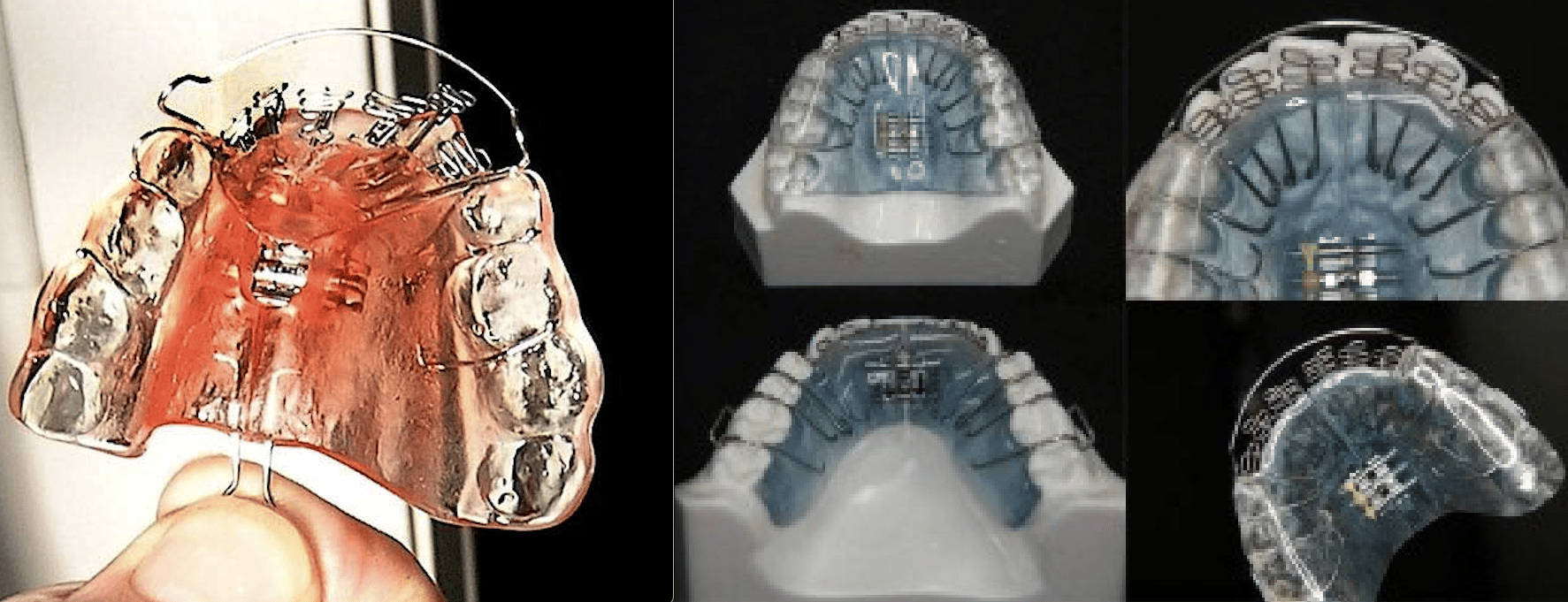
In: Epigenetic orthodontics.
The Transatlantic Connection
European functional orthodontists pioneered the concept of guiding natural growth. American clinicians refined these concepts using genetic research and 3D imaging. The DNA appliance synthesizes European biological thinking with American technological innovation.
Patient Experience:
Wear time: 8-16 hours daily (aligners require 22 hours)
Treatment duration: Often complete within 12-24 months
No permanent alterations or invasive procedures
Adults who avoided traditional braces find this approach more acceptable
Future Implications
This epigenetic approach shows orthodontics evolving from mechanically moving teeth to orchestrating biological processes. This paradigm shift equals the significance of Angle's original classification system.
Closing Thought
The Atlantic has functioned as a circulatory system for orthodontic ideas. Today's orthodontics faces multiple frontiers simultaneously: digital aligners require new compliance strategies, early intervention becomes gentler and more effective, and epigenetic approaches blur the line between orthodontics and medicine.
Invisalign's compliance challenges push digital monitoring solutions forward. The LM-Activator embodies preventive philosophy. DNA appliances address systemic health through jaw remodeling. Each innovation reflects transatlantic collaboration. European biological thinking meets American technological drive; American systematic approaches blend with European holistic philosophies.
Orthodontists now treat 6-year-olds in Helsinki with preformed activators, monitor teenagers' aligner wear in Houston through apps, and use epigenetic principles to relieve TMJ in adults. The specialty continues its collaborative evolution. Each generation inherits tools and concepts from across the ocean, refines them, and sends them back enriched.
In the digital era, this exchange happens at light speed. A breakthrough might emerge from a Finnish laboratory in the morning, undergo refinement in an American university by lunch, and reach patients on both continents by dinner. The future of orthodontics is instantaneous, integrated, and patient-centered.
📚 Sources & References — Compliance & LM Orthodontics
Compliance in Invisalign & Aligner Therapy:
Kuncio, D.E., Maganzini, A.L., Shelton, C., Freeman, K. (2014). "Invisalign and traditional orthodontic treatment postretention outcomes compared using the American Board of Orthodontics objective grading system." Angle Orthodontist, 84(4), 707–712.
Hansa, I., Semaan, S., Vaid, N.R. (2020). "Clinical outcomes and patient perspectives of Invisalign treatment compared to fixed appliance therapy: An evidence-based review." Journal of World Federation of Orthodontists, 9(3S), S45–S54.
Shalish, M., Cooper-Kazaz, R., Ivgi, I., Canetti, L., Tsur, B., Bachar, E., Chaushu, S. (2012). "Adult patients’ adjustability to orthodontic appliances. Part I: A comparison between labial, lingual, and Invisalign™." European Journal of Orthodontics, 34(6), 724–730.
LM-Activator & Early Orthodontics:
Keski-Nisula, K., Keski-Nisula, L., Salo, H., Voipio, K., Varrela, J. (2008). "Dentofacial changes after orthodontic intervention with the eruption guidance appliance in the early mixed dentition." American Journal of Orthodontics and Dentofacial Orthopedics, 133(2), 254–260.
LM-Dental (2023). "LM-Activator: Clinical Guidelines and Product Information." LM-Dental Oy, Parainen, Finland.
Myllärniemi, S., & Kerosuo, H. (2001). "Treatment of Class II malocclusion in the early mixed dentition with eruption guidance appliance." European Journal of Orthodontics, 23(6), 629–641.
Damon & MBT Bracket system. In: Mehmet Ali Yavan, et al. A Comparison of the Effects of Extraction and Nonextraction Orthodontic Treatments on Cephalometric Parameters and Arch Widths. December 2020. Cumhuriyet Dental Journal 24(1). DOI:10.7126/cumudj.812131. https://www.researchgate.net/publication/349422765_A_COMPARISON_OF_THE_EFFECTS_OF_EXTRACTION_AND_NONEXTRACTION_ORTHODONTIC_TREATMENTS_ON_CEPHALOMETRIC_PARAMETERS_AND_ARCH_WIDTHS
Roth versus MBT brackets. In: https://www.dentistry33.com/clinical-cases/orthodontics/645/roth-versus-mbt-does-bracket-prescription-have-an-effect-on-the-subjective-outcome.html
Farouk, K., Eissa, O., Ghoneima, A. et al. Treatment effects of Herbst appliance in skeletal Class II cases during pre-pubertal and post-pubertal periods: a cone-beam computed tomographic study. Sci Rep 13, 11342 (2023). https://doi.org/10.1038/s41598-023-37394-5. https://www.nature.com/articles/s41598-023-37394-5
Invisalign: https://nadjagurgel.com.br/invisalign-o-que-e-e-qual-as-vantagens-do-tratamento/
Das offne PR-Portal: https://www.openpr.de/news/517374/IDS-2011-Mikrochip-maximiert-Therapieerfolg-bei-herausnehmbaren-Zahnspangen.html
My LM-Acitvator: https://lm-activator.com/meet-the-new-my-lm-activator/
Epigenetic orthodontics for TMJ: https://thinkbetterlife.com/tmj-orthodontics-chicago/