- OrthoThrive
- Posts
- History of Amercian Orthodontics 7
History of Amercian Orthodontics 7
Pioneers & Personalities That Shaped the Field - The Innovators, Debaters, and Visionaries Who Defined Orthodontics

Borris Upton
August 12, 2025
Orthodontics as a Story of People
Every milestone in orthodontic history can be traced to a person — someone willing to challenge conventions, refine techniques, and sometimes fight fiercely for their vision of the specialty. Their tools and theories have left lasting legacies, but so have their personalities. Orthodontics is not just a record of inventions; it’s a chronicle of human determination.
Norman W. Kingsley (1829–1913) — The Artist of Orthodontics
Kingsley, a New York dentist and skilled sculptor, fused art and mechanics. His 1880 Treatise on Oral Deformities established foundational orthodontic principles in the U.S. He designed the Kingsley Plate and pioneered appliances for cleft palate patients, proving that orthodontics could restore both function and facial harmony. His work drew on European influences, particularly the mechanical ingenuity of Pierre Fauchard and Christophe-François Delabarre.
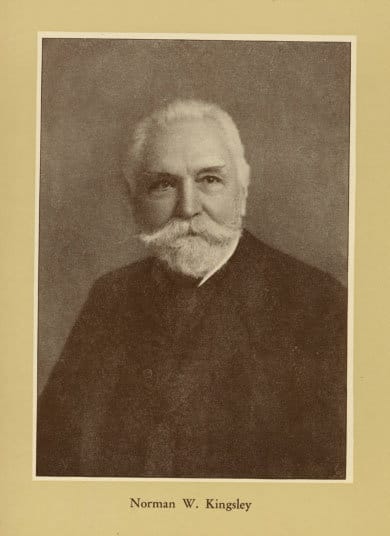
Norman W. Kingsley. In: Maxillary Prosthetics
Edward H. Angle (1855–1930) — The Architect of Order
Angle developed the first widely adopted classification system for malocclusion in 1899 — refining Delabarre’s earlier ideas into a clear, molar-relationship-based shorthand still used today. His E-Arch, Pin and Tube, Ribbon Arch, and Edgewise appliances shifted orthodontics from improvisation to precision engineering. Through his St. Louis and Pasadena schools, he trained a generation of specialists who carried his philosophy worldwide.
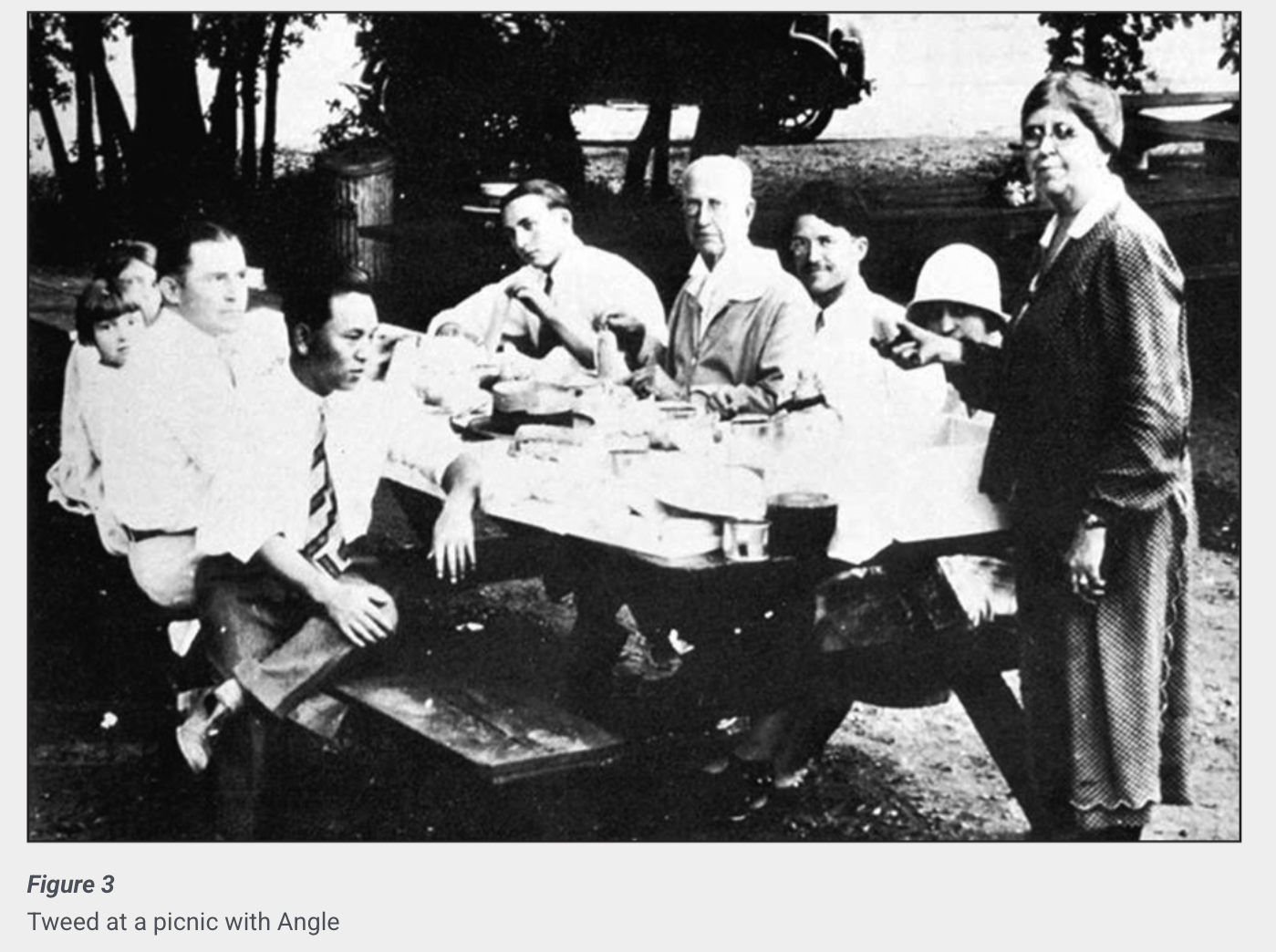
Tweed at a place with Angle. In: James L. Vaden,.A century of the edgewise appliance.

Anna Hopkins & Edward H. Angle: In. Orthodontics in 3 millennia.
Charles H. Tweed (1895–1970) — The Scientist of Anchorage
A student of Angle, Tweed reversed his mentor’s stance on extractions after long-term relapse studies. His Tweed Triangle cephalometric analysis formalized anchorage planning, making orthodontics more measurable and reproducible. Tweed’s extraction philosophy influenced practice on both sides of the Atlantic.
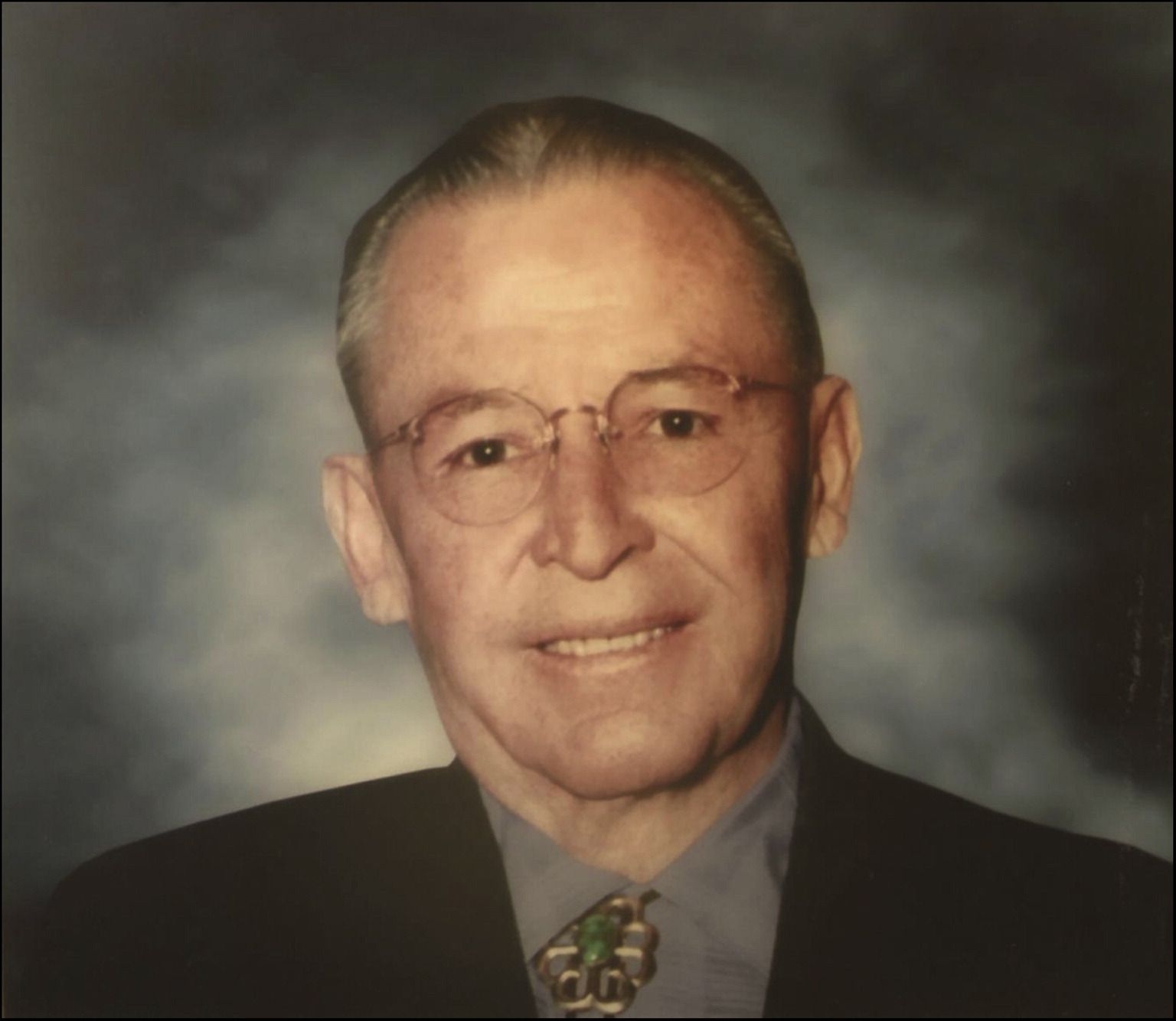
Charles H. Tweed
Calvin S. Case (1847–1923) — The Extraction Advocate
Case challenged Angle’s non-extraction dogma, arguing that tooth removal could improve facial balance and stability. Their debates were sharp, shaping orthodontic thought for decades. Case also contributed to early cleft palate treatment and stressed the role of facial aesthetics in orthodontic decision-making. Lawrence F. Andrews (1928–2023) — Straight-Wire Efficiency
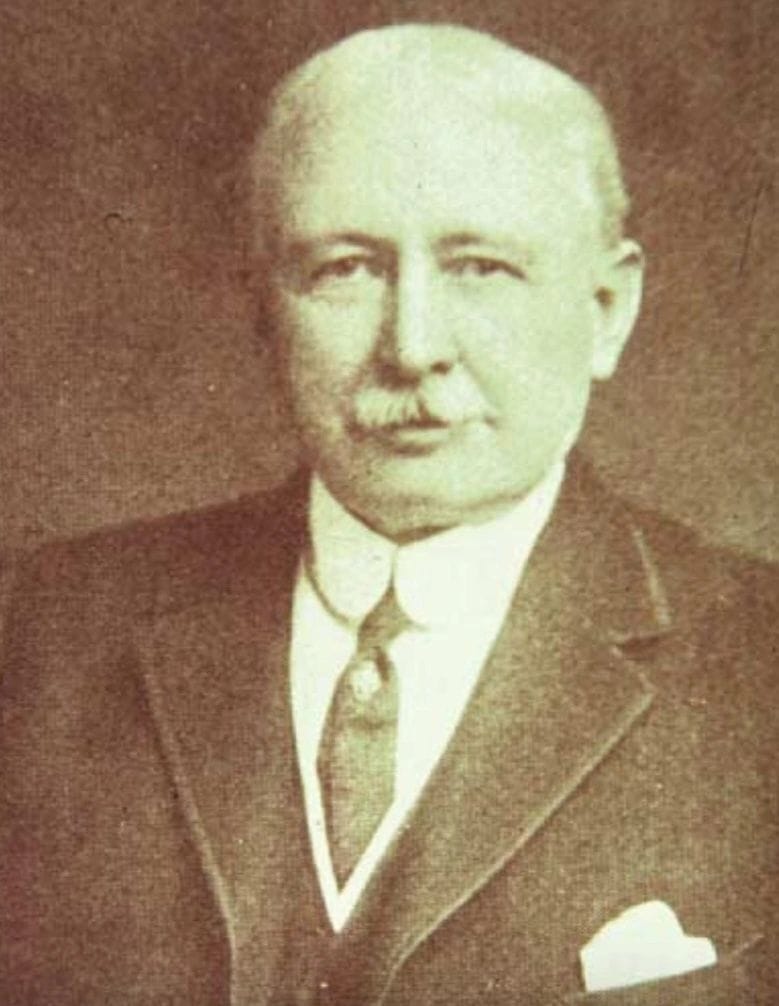
Calvin S. Case. In: Orthodontics in 3 millennia. Chapter 2: entering the modern era.
Andrews identified the “Six Keys to Normal Occlusion” and designed the straight-wire appliance, pre-angulated and pre-torqued to minimize wire bending. His system, introduced in the 1970s, remains the foundation for many bracket prescriptions today.
Robert M. Ricketts (1920–2003) — Seeing the Future
Ricketts advanced cephalometric growth prediction and the concept of visualized treatment objectives (VTOs). His work bridged clinical orthodontics with facial growth forecasting, influencing both functional and surgical treatment planning.
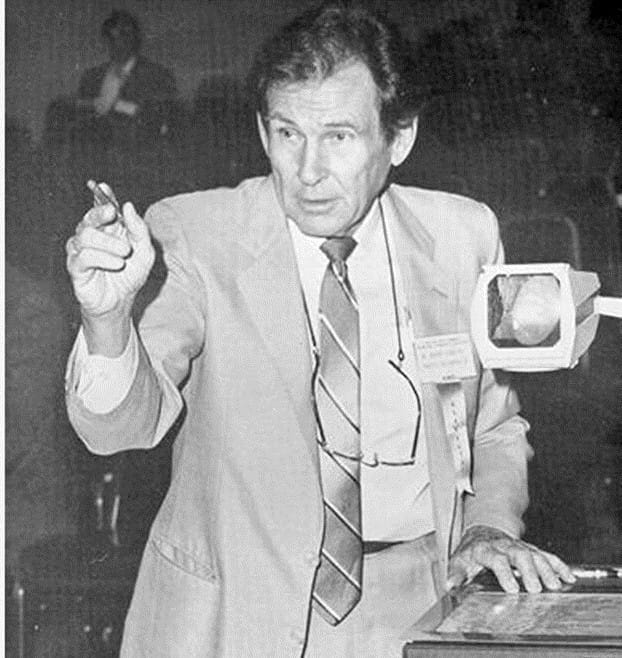
Rober M. Ricketts
European Counterparts & Co-Innovators
Christophe-François Delabarre (1787–1862) — The Classifier Before Angle
Delabarre’s 1819 classification of malocclusion was the first systematic attempt to categorize irregularities. Though more complex than Angle’s later scheme, it laid the groundwork for diagnostic thinking.
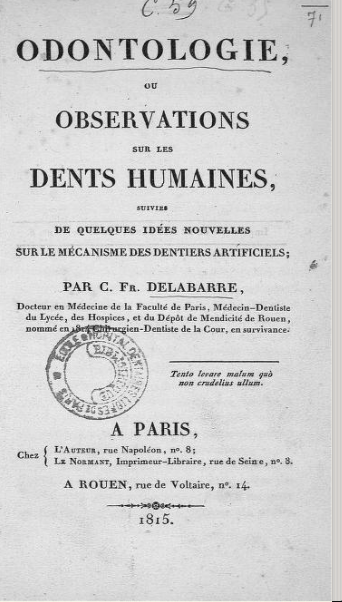
Christophe François Delabarre (1777–1862). Odontologie
Pierre Fauchard (1678–1761) — The Father of Modern Dentistry
Fauchard’s Le Chirurgien Dentiste introduced the bandeau — a horseshoe-shaped metal strip to expand dental arches. His concepts inspired later orthodontic mechanics.
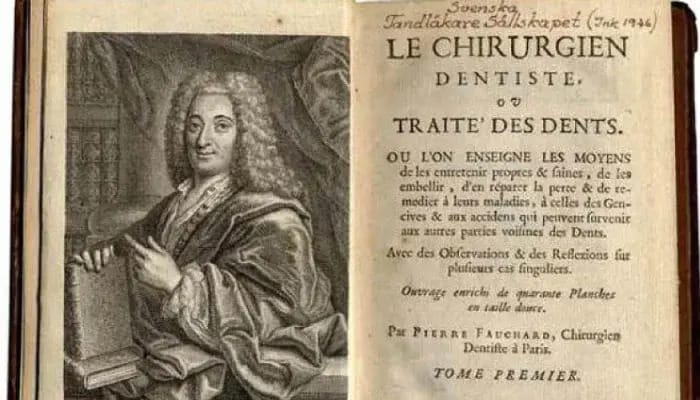
Pierre Fauchard
Viggo Andresen (1870–1950) — Functional Philosophy
A Danish innovator, Andresen created the Activator appliance, harnessing natural jaw growth to correct malocclusion. His approach influenced functional orthodontics worldwide, particularly in pediatric cases.
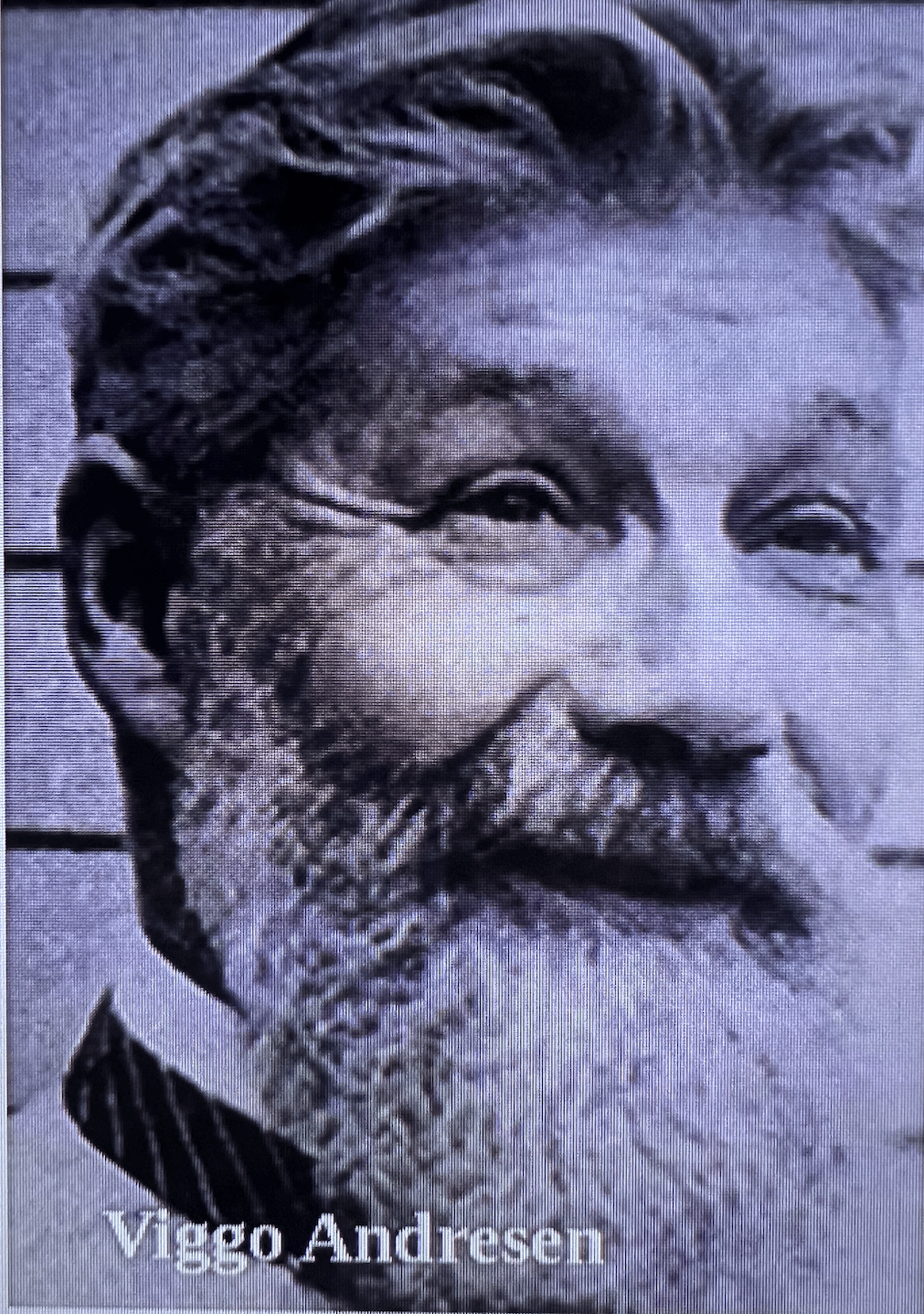
Viggo Andresen
Karl Häupl (1893 - 1960) & Hans Bimler (1916 - 2003)
At the university, Karl Häupl an Austrian pathologist and periodontist, saw the possibilities of the appliance and became an enthusiastic advocate of what he and Andresen called the “Norwegian system.” Activator use became so widespread among European practitioners that there was concern that proper diagnosis was being neglected.
Hans Bimler reasoned that it might be possible to expand the arch by means of crosswise mandibular movements, and the Bimler appliance was born.
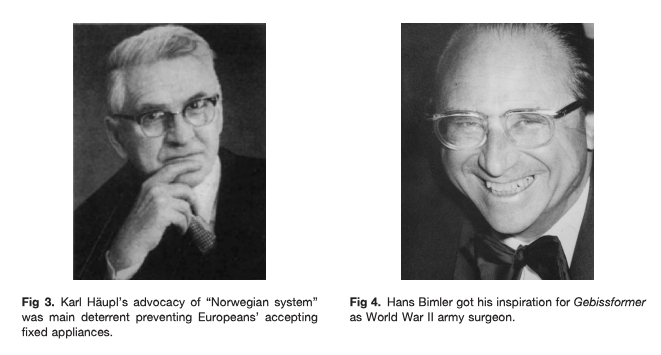
Karl Häupl & Hans Bimler
Martin Schwarz (1887 - 1963) & Harold D. Kesling (1901 - 1979)
Schwarz attempted to combine the advantages of the activator and the active plate by constructing separate mandibular and maxillary acrylic plates that were designed to occlude with the mandible in a protrusive position. In 1944, Harold D. Kesling (1901-79) (Fig 6) developed the tooth positioner. The technique involved taking impressions of a patient nearing completion, denuding the plaster of appliances, and resetting the teeth into ideal positions.
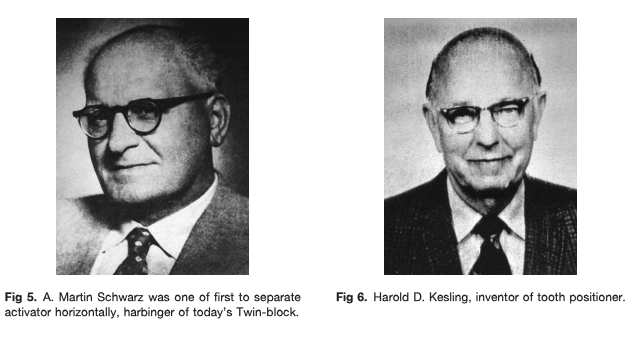
Martin Schwarz & Harold D. Kesling.
Rolf Fränkel (1926–2001) — Muscle as Medicine
From East Germany, Fränkel’s Functional Regulator targeted perioral muscles, aiming to change growth patterns by altering muscle function. His appliances gained significant traction in the U.S. in the late 20th century.
Rolf Fränkel
William J. Clark (1940– ) — The Twin Block
The Scottish orthodontist’s Twin Block appliance, introduced in the 1970s, offered a comfortable, patient-friendly method to advance the mandible. It became one of the most widely used functional appliances globally.

Dr. William J. Clark. In: Twin-Block
André Faure & Jean Delaire (20th century) — French Functionalists
Faure’s work on vertical control and Delaire’s reverse-pull headgear expanded European approaches to skeletal Class III correction, influencing cross-continental treatment protocols.
Closing: Character Shapes the Craft
The story of orthodontics is inseparable from the personalities who shaped it. From Kingsley’s artistry to Clark’s practical engineering, from Angle’s ordered systems to Andresen’s functional vision, each figure brought more than tools — they brought philosophies. The specialty has been built as much by conviction, rivalry, and collaboration as by science itself. And as new innovators rise, they will stand on the foundation laid by these remarkable individuals.
📚 Sources & References
Angle, E.H. (1907). Treatment of Malocclusion of the Teeth. Philadelphia: S.S. White.
Kingsley, N.W. (1880). A Treatise on Oral Deformities. New York: Appleton.
Case, C.S. (1908). A Practical Treatise on the Technics and Principles of Dental Orthopedia. Chicago.
Wahl, N. (2005). “Orthodontics in 3 Millennia, Chapters 1–3.” AJODO, 127(2), 255–315.
Clark, W.J. (1988). Twin Block Functional Therapy. Mosby.
Graber, L.W., Vanarsdall, R.L., Vig, K.W.L., & Huang, G.J. (2016). Orthodontics: Current Principles and Techniques. Elsevier.
James L. Vaden,.A century of the edgewise appliance. https://apospublications.com/a-century-of-the-edgewise-appliance/
Twin-Block. In: https://www.zwp-online.info/fachgebiete/kieferorthopaedie/grundlagen/korrektes-trimmen-von-twin-block-aufbissen
Maxillary Prosthetics. In: Murray, Margaret & Pappas, Theodore & Powers, David. (2020). Maxillary Prosthetics, Speech Impairment, and Presidential Politics: How Grover Cleveland Was Able to Speak Normally after His “Secret” Operation. The Surgery Journal. 06. e1-e6. 10.1055/s-0039-3400537. https://www.researchgate.net/publication/337716128_Maxillary_Prosthetics_Speech_Impairment_and_Presidential_Politics_How_Grover_Cleveland_Was_Able_to_Speak_Normally_after_His_Secret_Operation
Calvin S. Case. In: Wahl N. Orthodontics in 3 millennia. Chapter 2: entering the modern era. Am J Orthod Dentofacial Orthop. 2005 Apr;127(4):510-5. doi: 10.1016/j.ajodo.2005.01.002. PMID: 15821696. https://www.semanticscholar.org/paper/Orthodontics-in-3-millennia.-Chapter-2%3A-entering-Wahl/cfd9c9cb8bbd35fbb47de3734986ab07f8dc52dd
Rober M. Ricketts. In: https://www.ajodo.org/article/S0889-5406%2803%2900733-9/fulltext#figure-2
Pierre Fauchard. In: https://www.stroopeorthodontics.com/blog/2018/9/17/history-of-teeth-straightening
Christophe François Delabarre (1777–1862). In: Odontologie: https://archive.org/details/BIUSante_APHPF00120
Viggo Andresen. In: https://drgvittozzi.altervista.org/classe-ii-trattamento-precoce-e-tardivo/
Rolf Fränkel. In: https://www.ajodo.org/article/S0889-5406%2802%2903896-9/fulltext
Anna Hopkins & Edward H. Angle. In: Wahl N. Orthodontics in 3 millennia. Chapter 2: entering the modern era. Am J Orthod Dentofacial Orthop. 2005 Apr;127(4):510-5. doi: 10.1016/j.ajodo.2005.01.002. PMID: 15821696.
Charles H. Tweed. In: Vaden, James L. American Journal of Orthodontics and Dentofacial Orthopedics, Volume 147, Issue 5, S171 - S179. https://www.ajodo.org/article/S0889-5406%2815%2900103-1/fulltext
Karl Häupl & Hans Bimler. In: https://moroortodontia.com.br/leitura/historia%20ap%20funcionais.pdf
Martin Schwarz & Harold D. Kisling. In: https://moroortodontia.com.br/leitura/historia%20ap%20funcionais.pdf